Beyond the Middleman: How American Businesses Are Building Direct Alliances With Darjeeling's Worker Cooperatives
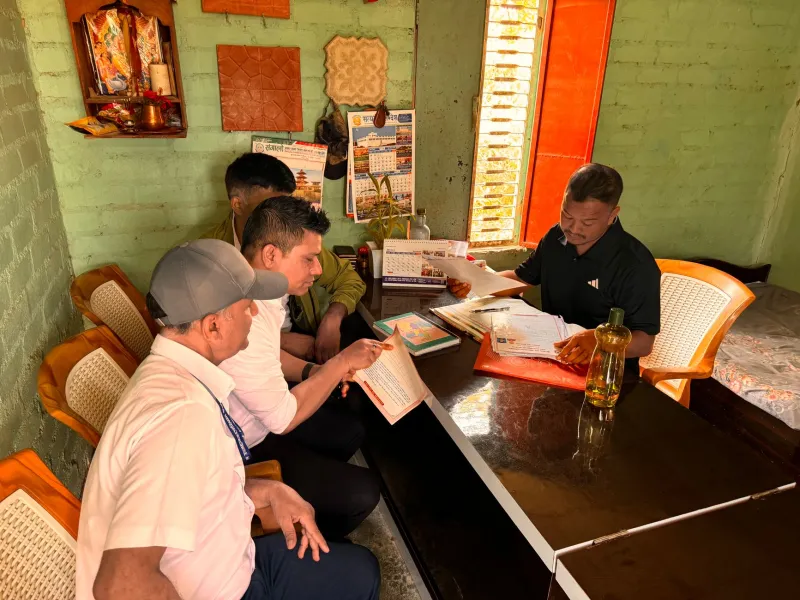
For much of the twentieth century, the path from Darjeeling's hillside farms and artisan workshops to American storefronts wound through a labyrinth of brokers, export agents, and wholesale distributors. Each layer extracted its margin, compressed the producer's share, and introduced friction that slowed responsiveness and diluted accountability. Today, a growing cohort of US companies is dismantling that architecture—reaching directly into Darjeeling's cooperative sector and discovering that the arrangement benefits nearly everyone involved except the intermediaries themselves.
The shift is not merely ideological. It is grounded in hard commercial logic, and APS Darjeeling has observed its acceleration firsthand as more American procurement officers and sourcing directors inquire about connecting with community-led organizations across the region.
A Different Kind of Supplier
Worker cooperatives in Darjeeling operate on a fundamentally different incentive structure than conventional contract manufacturers or commodity exporters. Members hold equity stakes in their organizations, participate in governance decisions, and share in collective profits. That ownership model produces a workforce with a direct financial interest in quality control, delivery reliability, and long-term client relationships.
For American buyers accustomed to managing supplier relationships through punitive contract clauses and frequent audits, working with a cooperative can feel disorienting at first. The communication is more transparent, the pricing negotiations more candid, and the relationship more reciprocal. Several US specialty food importers and wellness brands that have made the transition describe an initial adjustment period followed by a procurement experience that is, by their own accounts, significantly less adversarial.
One Pacific Northwest-based tea and botanicals company that began direct sourcing from a Darjeeling cooperative three years ago reported a 22 percent reduction in landed cost compared with its prior broker-mediated supply chain—savings it has partially reinvested in cooperative development programs and partially returned to consumers through competitive retail pricing. The cooperative, meanwhile, received a price per kilogram that exceeded its previous export earnings by a margin sufficient to fund a new processing facility.
The Ethical Dividend
Beyond the financial calculus, direct cooperative partnerships offer American companies something increasingly valuable in the current consumer environment: a credible, verifiable story. US shoppers, particularly younger demographics, are demonstrating sustained willingness to pay premiums for products whose supply chains can withstand scrutiny. Third-party certifications help, but they are no substitute for the kind of granular traceability that direct relationships enable.
When a Brooklyn-based specialty grocery chain can tell its customers the name of the cooperative that harvested their first-flush Darjeeling tea, the elevation at which those leaves were picked, and the percentage of the sale price that returned to picker-members, that narrative carries persuasive weight that no certification logo can fully replicate. It transforms a commodity transaction into a relationship that consumers feel they are participating in.
Darjeeling's cooperatives, for their part, have invested substantially in documentation and digital transparency tools—partly because APS Darjeeling and allied development organizations have supported capacity-building in this area. Many cooperatives now maintain detailed lot-level records that American partners can access and, in some cases, share directly with end consumers through QR codes on retail packaging.
Operational Realities and How Cooperatives Address Them
Skeptics of direct sourcing from small-scale cooperatives frequently raise legitimate concerns: volume consistency, regulatory compliance with US import standards, and the logistical complexity of managing an international supplier without an intermediary to absorb friction. These concerns deserve serious engagement rather than dismissal.
On volume, Darjeeling's cooperative sector has matured considerably. Several federations of smaller cooperatives now operate under shared export infrastructure, enabling them to aggregate supply and meet minimum order requirements that individual units could not satisfy independently. American buyers seeking modest initial volumes often find that cooperatives can accommodate trial orders with a flexibility that larger exporters resist.
Regulatory compliance is an area where cooperative governance structures prove surprisingly advantageous. Because member-owners bear collective responsibility for export certification and food safety documentation, there is internal accountability that dispersed contract farming arrangements often lack. Cooperatives with established US client relationships have, in many cases, proactively aligned their practices with FDA import requirements and USDA organic certification standards.
Logistics remain the most genuinely complex dimension of direct sourcing, and honest counsel is warranted here. American companies new to direct international procurement should anticipate an investment of time and legal resources in establishing contracts, arranging freight forwarding, and navigating customs compliance. Several US-based fair trade consulting firms now specialize in precisely this transition, and their involvement can substantially compress the learning curve.
Sectors Where the Model Is Gaining Ground
While specialty tea remains the most visible arena for US-Darjeeling cooperative partnerships, the model is expanding into adjacent categories. Organic spice blends, handcrafted textiles, and botanical wellness ingredients are all sectors where Darjeeling cooperatives are actively cultivating American client relationships.
The textile cooperatives are perhaps the most instructive case for companies outside the food industry. Several US apparel and home goods brands have engaged Darjeeling weaving cooperatives to produce limited-edition collections that carry explicit cooperative provenance. These collections have, without exception, sold faster than comparable conventionally sourced products at equivalent or higher price points—a data point that is not lost on brand managers watching their analytics.
In the wellness and supplements sector, where consumer trust is both essential and fragile, Darjeeling cooperatives producing medicinal herbs and adaptogenic botanicals have found receptive American partners among brands that have faced scrutiny over opaque supply chains. The cooperative model's inherent transparency functions as a competitive differentiator in a market where ingredient provenance is under increasing regulatory and journalistic scrutiny.
What Enduring Partnerships Require
The cooperative partnerships that have proven most durable share several characteristics worth noting for American companies evaluating this sourcing strategy. First, they are built on multi-year commitments rather than spot purchases. Cooperatives that can plan their production cycles around reliable forward contracts invest more confidently in quality improvements and capacity expansion. American buyers who treat cooperative sourcing as a hedge against supply disruptions rather than a genuine strategic commitment tend to generate less value for both parties.
Second, the strongest partnerships involve some form of technical or developmental exchange. US companies with expertise in packaging, food science, digital marketing, or regulatory affairs have found that sharing that knowledge with cooperative partners accelerates the relationship's maturation and deepens mutual investment in its success. APS Darjeeling actively facilitates these knowledge exchanges as part of its broader mission to connect community organizations with resources that support sustainable development.
Third, patience is a genuine prerequisite. Building trust with a cooperative whose members have experienced decades of extractive commercial relationships requires demonstrated consistency over time. American companies that approach Darjeeling cooperatives with the expectation of immediate, frictionless transaction efficiency will likely be disappointed. Those that arrive with a longer horizon and genuine curiosity about the communities they are engaging tend to find the relationship rewarding in ways that extend well beyond the balance sheet.
The Darjeeling cooperative sector is not a panacea for every American company's sourcing challenges. But for those whose products and values align with what these community-owned organizations offer, the case for direct partnership has never been more compelling—or more carefully documented.