From the Himalayas to the American Table: Darjeeling's Food Entrepreneurs Carry Their Cuisine Across the Ocean
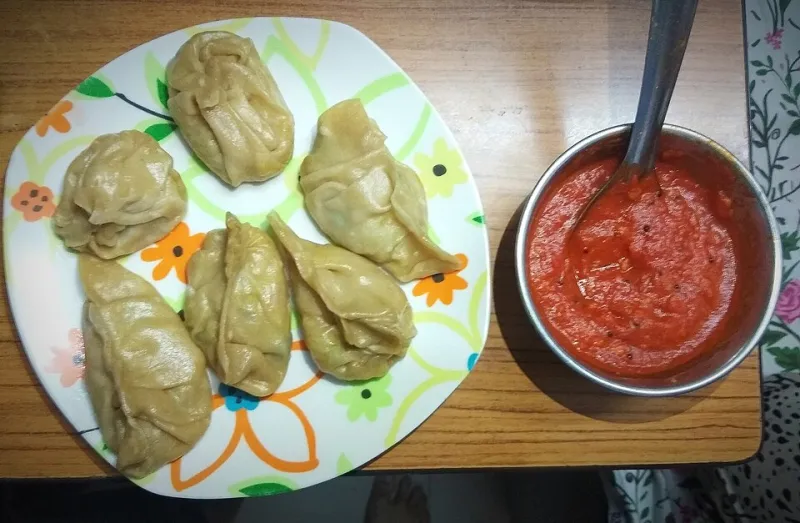
Photo: Kxnyshk, CC BY-SA 4.0, via Wikimedia Commons
There is a particular kind of courage required to carry a cuisine across an ocean. It is not only the courage of the entrepreneur — the willingness to risk capital and reputation on an untested market. It is the courage of the custodian: the decision to translate something intimate and communal into a product that strangers will evaluate, modify, and judge by standards shaped in an entirely different culture. The food entrepreneurs emerging from Darjeeling are practicing both kinds of courage simultaneously, and the results are beginning to appear on American menus and retail shelves in ways that would have seemed improbable a decade ago.
Darjeeling's culinary identity is layered and specific. It is shaped by Nepali, Tibetan, Lepcha, and Bengali influences, by altitude and agricultural tradition, by the particular produce that grows at elevations between three thousand and seven thousand feet. Momos — the region's beloved steamed dumplings — are perhaps its most internationally recognized contribution, but the full repertoire extends far beyond them: fermented gundruk greens, sel roti rice bread, thukpa noodle broth, sinki radish preparations, and a range of pickled and preserved vegetables that reflect centuries of mountain food culture. Bringing this repertoire to American consumers in a form that is both accessible and authentic is the central challenge these entrepreneurs are navigating.
The First Barrier: Regulatory Complexity
For any food entrepreneur seeking to enter the United States market, the regulatory landscape is formidable. For those working with traditional fermented, pickled, or preserved products — categories that form a significant portion of Darjeeling's culinary identity — the complexity intensifies considerably. The U.S. Food and Drug Administration's requirements around acidity levels, labeling, facility certification, and import protocols were not designed with small-batch Himalayan producers in mind.
Several Darjeeling entrepreneurs who have successfully navigated this process describe it as a years-long education in regulatory adaptation. One founder of a packaged momo and condiment line now sold in South Asian specialty stores across New York and New Jersey recalls spending nearly eighteen months working with a food safety consultant before her first product received import clearance. "Every ingredient had to be documented. Every process had to be standardized in ways that were very different from how we had always made these foods," she explains. "You have to hold onto the spirit of the recipe while changing the structure of how it is produced."
This tension — between the living, variable nature of traditional food production and the standardization demanded by commercial food safety systems — is perhaps the defining challenge of this entrepreneurial wave. Those who have navigated it most successfully tend to describe the process not as a compromise of authenticity but as a form of translation: finding equivalences that preserve flavor and cultural meaning while satisfying institutional requirements.
Building a Brand Without Erasing the Origin
In the American food market, regional identity can be a powerful commercial asset. Consumers in major metropolitan areas — particularly those in cities with significant South Asian diaspora populations such as New York, Chicago, Seattle, and the San Francisco Bay Area — have demonstrated genuine enthusiasm for foods that carry a specific, traceable provenance. The "Darjeeling" name itself carries considerable recognition in the United States, largely through the region's association with premium tea. Several entrepreneurs have leveraged this existing awareness as a foundation for broader culinary storytelling.
One Brooklyn-based restaurateur originally from the Darjeeling Hills has built a following by positioning her establishment explicitly as a Himalayan regional kitchen rather than a generalized South Asian dining experience. The distinction matters to her and, she has found, to her customers. "People come in having heard of Darjeeling tea, and they are curious. They want to understand what else comes from that place," she says. "The tea opened a door. The food is what is behind it."
Her menu rotates seasonally and incorporates ingredients sourced directly from Darjeeling producers where import logistics permit. Where substitution is necessary, she documents it openly, treating transparency as a form of respect for both the cuisine and the diner. This approach has attracted food writers and culinary tourists alongside the diaspora community that forms her consistent base, creating a layered audience that sustains the business across different occasions and motivations.
Scaling Without Losing the Story
The question of scale is one that every food entrepreneur must eventually confront, and it carries particular weight for those working with culturally significant recipes. Increasing production volume typically requires process standardization, supplier diversification, and operational changes that can gradually erode the qualities that made a product distinctive in the first place. For Darjeeling's food entrepreneurs, this risk is compounded by the distance between their source community and their primary market.
Some have responded by deliberately limiting their scale, choosing to operate as premium, small-batch producers rather than pursuing mass-market distribution. This decision carries financial trade-offs but preserves a level of quality control and cultural specificity that larger operations struggle to maintain. Others have invested in direct supply chain relationships with producers in Darjeeling, building partnerships that allow them to grow without severing their connection to the origin.
A packaged tea and culinary goods company founded by a Darjeeling native now living in California has formalized this approach by establishing a cooperative sourcing model, purchasing directly from small farming families in the hills and providing American consumers with detailed information about each producer. The model generates a premium price point that is justified, in part, by the story it carries. "People are not just buying a product," the founder notes. "They are buying a relationship with a place and with the people who made what they are consuming."
What American Diners Are Discovering
Beyond the entrepreneurial mechanics, there is a simpler story unfolding at the table. American diners who encounter Darjeeling's culinary traditions for the first time frequently describe a cuisine that feels simultaneously familiar and entirely new — warming, vegetable-forward, fermentation-rich, and built around flavors that are complex without being aggressive. In a food culture increasingly drawn to fermented and preserved foods, plant-based preparations, and globally sourced ingredients, Darjeeling's cuisine arrives at a propitious moment.
The community that APS Darjeeling serves takes genuine pride in this development. The journey of a regional food tradition from mountain households to American restaurant tables is not a simple one, and it is not without its tensions. But it is also a form of cultural connection — a way of making the Himalayas present, in some small and flavorful way, in the daily lives of people half a world away. For the entrepreneurs making that journey possible, it is work that carries meaning well beyond the commercial.