From Household Hustle to Regional Powerhouse: The Women Entrepreneurs Reshaping Darjeeling's Economy
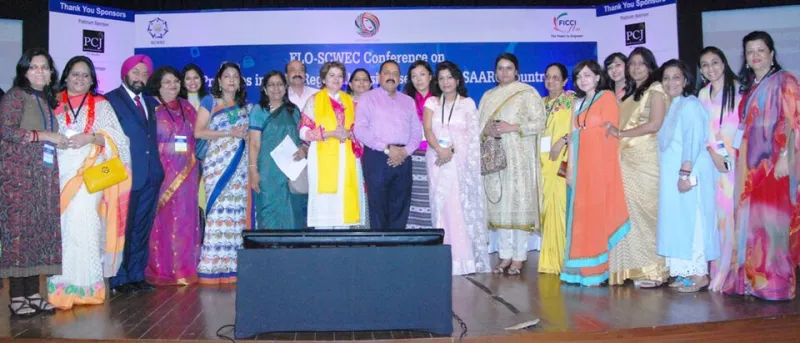
Photo: Ministry of Development of North Eastern Region, GODL-India, via Wikimedia Commons
There is no venture capital firm on Darjeeling's Mall Road. There is no accelerator program tucked between the tea shops and the tailors. What there is, in growing abundance, is a cohort of women who have built businesses of genuine regional consequence from starting points that most American startup culture would not recognize as starting points at all — a spare room, a borrowed loom, a mobile phone with intermittent signal, and a market insight sharp enough to cut through every structural disadvantage the Darjeeling hills could throw at them.
APS Darjeeling has spent considerable time over the past several years documenting the trajectories of these entrepreneurs. What emerges from that documentation is not a single story but a pattern — a recognizable set of strategies, pivots, and hard-won principles that have allowed a remarkable number of women in this district to cross the threshold from subsistence-level self-employment into something that looks, by any honest measure, like a real business.
The Microenterprise Myth
The international development community has long treated microenterprises in regions like Darjeeling as a welfare instrument rather than an economic one — a way to provide supplemental income to households that will always depend primarily on wages from tea gardens or remittances from family members working in the plains. That framing, however well-intentioned, has consistently underestimated what is actually possible when capable entrepreneurs are given even modest access to markets, information, and community support.
The women profiled here did not set out to challenge a development paradigm. They set out to solve specific problems — their own and their customers'. But in doing so, they have collectively demonstrated something important: that the ceiling on enterprise growth in Darjeeling is lower than it needs to be, and that the primary constraints are structural rather than inherent.
Priya Tamang: The Logistics Innovator
Priya Tamang started by selling homemade nettle-fiber textiles at the Saturday market in Kalimpong. That was eleven years ago. Today, she manages a production cooperative involving fourteen artisan households, supplies three Kolkata-based lifestyle retailers, and has begun exploratory conversations with a US-based fair-trade importer.
The pivot that changed everything, she says, was not a new product. It was a new system. "I realized that every woman in this network was solving the same logistics problem independently and badly," she explains. "We were all spending half our time and money on transport. So I stopped thinking about my business and started thinking about our business."
By pooling transport costs, negotiating collective delivery contracts with a Siliguri freight operator, and standardizing packaging for retail presentation, Priya reduced per-unit logistics costs for the cooperative by nearly forty percent within eighteen months. The savings were reinvested in quality control and a rudimentary e-commerce presence — a WhatsApp catalog that evolved, over time, into a proper website.
Her advice to other entrepreneurs navigating similar terrain is direct: identify the shared inefficiency before you identify the individual opportunity. In high-friction markets, collective logistics infrastructure is often worth more than product differentiation.
Sunita Rai: Turning Culinary Heritage Into a Scalable Food Business
Sunita Rai's entry point was a tiffin service. She began cooking traditional Gorkha meals for office workers in Darjeeling town in 2015, operating out of her kitchen with a single delivery assistant. Within two years, demand had outpaced her capacity, and she faced the choice that defines the microenterprise crossover moment: stay manageable or build systems.
She chose to build systems — and to document everything. Every recipe was standardized. Every supplier relationship was formalized with written agreements. Every cost was tracked, initially in a paper ledger and later in a mobile accounting application recommended by a contact in her local self-help group network.
Today, Sunita's operation supplies packaged ready-to-eat Himalayan foods to hotels across the Darjeeling circuit and has recently secured a pilot listing with an online specialty food platform serving the Indian diaspora in the United States. Her revenue has grown tenfold from her tiffin service peak.
The lesson she emphasizes most consistently is one that echoes across business schools but rarely reaches informal food entrepreneurs: margin discipline. "I see many women start food businesses and never know if they are making money or losing it," she says. "The moment I started tracking every cost, I found three things I was doing that were profitable and two that were not. I stopped the two."
Kamala Gurung: Digital Commerce as the Great Equalizer
Of all the structural barriers facing women entrepreneurs in Darjeeling, geographic isolation has historically been among the most stubborn. Distance from major commercial centers, unreliable road access during monsoon season, and limited exposure to national retail networks have kept countless capable businesses from reaching the markets their products deserve.
Kamala Gurung's business — a line of small-batch, altitude-grown herbal wellness products — was built, from the outset, for a digital-first distribution model. She invested in photography equipment before she invested in production equipment, understanding that in the e-commerce environment, presentation is infrastructure.
Her products now ship to customers across India and, through a partnership with a US-based natural wellness distributor, to several American states. She manages customer service, inventory, and fulfillment from a workspace that would not look out of place in a Brooklyn co-working facility — except that it sits at 6,800 feet above sea level with a view of Kanchenjunga on clear days.
Kamala's trajectory illustrates a broader dynamic that APS Darjeeling has observed across the district's entrepreneurial community: digital commerce has not eliminated geographic disadvantage, but it has fundamentally altered the terms on which mountain entrepreneurs compete. A well-photographed, well-reviewed product on a national e-commerce platform carries no altitude penalty.
Common Threads: What These Entrepreneurs Share
Across these profiles and the broader community of women entrepreneurs that APS Darjeeling works with, several strategic commonalities emerge:
-
Formalization as a growth catalyst. Each of these women made a deliberate decision at some point to formalize operations — registering their businesses, opening dedicated bank accounts, or joining a cooperative structure. Formalization opened access to credit, institutional buyers, and export channels that remained closed to informal operators.
-
Community networks as market intelligence. In the absence of paid market research, peer networks — self-help groups, cooperative associations, informal WhatsApp communities — serve as the primary channel through which these entrepreneurs learn about new opportunities, pricing benchmarks, and regulatory changes.
-
Technology adoption as a leveler. Mobile payments, digital accounting tools, social commerce platforms, and e-commerce marketplaces have each played a role in reducing the friction that geography imposes on Darjeeling-based businesses.
-
Patient capital and reinvestment discipline. Without access to institutional financing, these entrepreneurs have funded growth through retained earnings. That constraint, frustrating as it is, has produced a culture of capital discipline that many externally funded startups would benefit from emulating.
The Broader Imperative
The women documented here are not anomalies. They are early movers in a broader economic transition that Darjeeling is undergoing — one in which the district's human capital, cultural assets, and ecological distinctiveness are being mobilized as competitive advantages rather than treated as footnotes to the tea industry's legacy.
APS Darjeeling's role in that transition is to connect: to link entrepreneurs with markets, knowledge, and each other; to document what is working and share it widely; and to advocate for the policy and infrastructure changes that would allow more women to follow the paths that Priya, Sunita, and Kamala have carved.
The Fortune 500 may not have a Darjeeling address. But the entrepreneurial intelligence, the resilience, and the market instinct that built those global enterprises? Those are very much present on these hillsides. The work is to ensure that the structures surrounding these entrepreneurs grow as fast as the entrepreneurs themselves.