Lending Up the Mountain: How Darjeeling's Community Finance Experiments Are Rewriting the Rules for American Small Business Credit
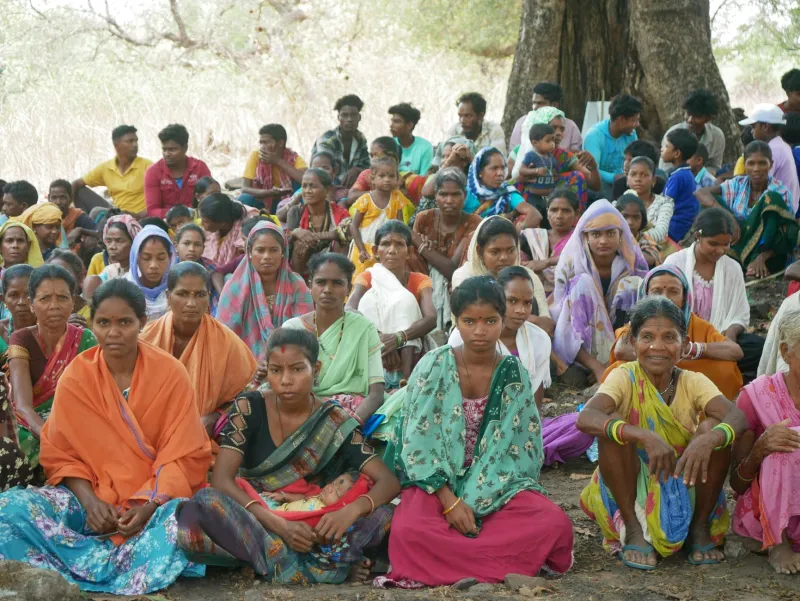
At first glance, the financial struggles of a tea-farming cooperative in the foothills of the Eastern Himalayas and a small hardware retailer in rural Appalachia may seem worlds apart. Yet the structural barriers each faces — insufficient collateral, limited credit history, and the indifference of large commercial banks — are remarkably alike. Over the past several years, a quiet but consequential exchange of ideas has begun bridging those two worlds, with Darjeeling's microfinance institutions emerging as unlikely but instructive models for community lenders across the United States.
A System Born From Necessity
Darjeeling's microfinance landscape did not arise from academic theory. It grew from the practical demands of communities who had long been excluded from conventional banking infrastructure. When formal credit remained inaccessible to smallholder farmers, artisans, and home-based entrepreneurs, local organizations developed peer-lending circles — small groups of borrowers who collectively guaranteed one another's loans. The arrangement required no traditional collateral. Instead, it substituted social trust, mutual accountability, and shared economic incentive.
Over time, these group-guarantee systems evolved into more sophisticated structures. Some institutions introduced tiered lending, in which borrowers who repaid smaller initial loans unlocked access to progressively larger credit facilities. Others layered in financial literacy programming, ensuring that capital arrived alongside the knowledge required to deploy it effectively. The result was a financing ecosystem that was simultaneously informal in its social architecture and rigorous in its repayment discipline.
Repayment rates across several of Darjeeling's most established microfinance cooperatives have consistently outperformed those of conventional small-business loan portfolios — a statistic that has not gone unnoticed by researchers studying community development finance in the United States.
American Lenders Take Notice
Community Development Financial Institutions, commonly known as CDFIs, occupy a critical but often under-resourced corner of the American lending landscape. Chartered to serve low-income and economically distressed communities, CDFIs have long struggled with the same challenge that motivated Darjeeling's homegrown financial innovators: how to extend credit responsibly to borrowers whom conventional metrics systematically undervalue.
In recent years, several CDFIs operating in rural regions of states including Kentucky, West Virginia, and New Mexico have begun incorporating elements drawn directly from Darjeeling's peer-lending frameworks. Rather than evaluating loan applicants in isolation, these organizations have piloted group lending cohorts in which small clusters of local entrepreneurs apply together, undergo shared financial training, and assume a degree of collective responsibility for one another's repayment progress.
One CDFI operating in eastern Kentucky restructured a portion of its small-business portfolio along these lines after its program officers studied documentation of Darjeeling's cooperative lending practices. According to the organization's published reports, early cohorts demonstrated measurably stronger repayment performance than comparable individual loan recipients — a finding consistent with the Darjeeling model's core premise that social accountability can function as a meaningful substitute for conventional collateral.
The Group Guarantee Translated
Adapting Darjeeling's group-guarantee mechanism to the American context has required thoughtful modification. In Darjeeling, peer-lending circles typically operate within tight-knit communities where borrowers share professional sectors, geographic proximity, and often longstanding personal relationships. Replicating that density of social connection in dispersed rural American communities demands deliberate design.
Some American organizations have addressed this by anchoring lending cohorts around existing community institutions — churches, small business associations, farmers' markets, and rural co-ops — rather than attempting to construct new social networks from scratch. By working within frameworks where trust already exists, these lenders have found it possible to approximate the accountability dynamics that make Darjeeling's model function.
Others have introduced digital coordination tools that allow geographically separated borrowers to maintain the kind of ongoing communication that peer accountability requires. Here, the influence of Darjeeling's own experience with technology-assisted community finance becomes particularly relevant. Several of Darjeeling's microfinance institutions have in recent years adopted mobile-based repayment tracking and group communication platforms, demonstrating that the human architecture of peer lending can be preserved even as its physical infrastructure evolves.
Investors Recalibrate Risk
Beyond the operational mechanics of lending, Darjeeling's experience is also prompting a broader reconsideration of how risk is defined and measured in small-business finance. Traditional credit scoring models were designed around individual financial histories and asset holdings — metrics that structurally disadvantage communities with limited access to formal banking. Darjeeling's institutions, by contrast, developed their own evaluative frameworks centered on community embeddedness, business viability, and social reputation.
American impact investors and mission-driven lenders are increasingly receptive to these alternative risk frameworks. Several venture philanthropies and community investment funds have begun funding pilot programs that test Darjeeling-inspired evaluation criteria alongside or in place of conventional credit scoring. Early evidence suggests that such frameworks may identify creditworthy borrowers who would otherwise be declined — a finding with significant implications for equitable economic development in underserved American communities.
The Knowledge Exchange Continues
The flow of insight between Darjeeling and the United States has not been unidirectional. As American CDFIs and community lenders adapt Darjeeling's frameworks to their own contexts, they are generating new data and operational knowledge that Darjeeling's institutions find instructive in turn. Questions about scaling peer-lending models, integrating digital infrastructure, and measuring long-term borrower outcomes are challenges both communities share.
APS Darjeeling has observed this exchange with considerable interest. The organization's commitment to connecting Darjeeling's communities with global partners rests on the conviction that the region's innovations — in agriculture, in technology, in cultural stewardship, and now in finance — hold genuine value for the wider world. The microfinance story is among the most compelling illustrations of that conviction.
For American entrepreneurs and investors engaged in community development finance, Darjeeling offers not a template to be copied wholesale, but a proven demonstration that alternative credit architectures can work — that communities excluded from conventional finance are not inherently high-risk, but rather inadequately served by instruments that were never designed with them in mind.
Looking Forward
The structural credit gap facing small businesses in rural and underserved American communities is not a new problem. What is new is the growing willingness among lenders, investors, and policymakers to look beyond conventional solutions — and to find, in places like Darjeeling, evidence that different approaches are not only possible but demonstrably effective.
As that willingness deepens, the highland lending laboratories of Darjeeling may prove to be among the most consequential financial classrooms that American community development has yet encountered.