Above the Noise: How Darjeeling's Mountain Retreats Are Offering American Executives a New Path Through Burnout
The statistics are no longer surprising, but they remain alarming. According to the American Institute of Stress, workplace burnout affects an estimated 83 percent of US workers, with senior executives and high-performing professionals bearing a disproportionate share of the burden. Employee assistance programs, mindfulness apps, and corporate wellness stipends have proliferated in response — yet the needle on mental health outcomes has barely moved. A different kind of intervention, one rooted in altitude, silence, and centuries of Himalayan healing tradition, is beginning to attract serious attention from American professionals who have exhausted more familiar remedies.
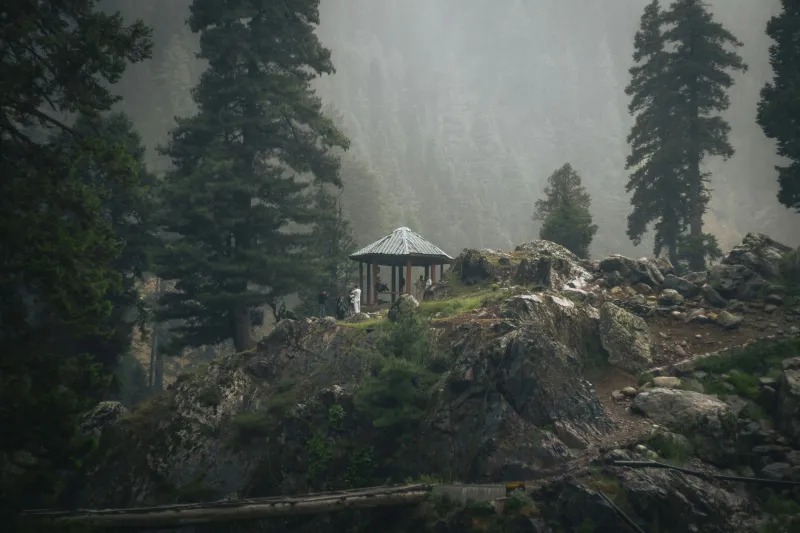
In Darjeeling, a constellation of community-led wellness organizations has spent the better part of a decade refining retreat experiences that draw on the region's unique geography, cultural heritage, and indigenous therapeutic knowledge. These are not luxury spa holidays dressed in mountain scenery. They are structured, intentional programs that ask participants to slow down, move through difficult terrain, and engage with healing practices that predate modern psychology by generations.
When the Boardroom Follows You Everywhere
Marissa Calloway, a chief operating officer at a mid-sized logistics firm based in Atlanta, describes the months leading up to her Darjeeling retreat as a period of sustained erosion. "I was technically functioning," she says. "I was hitting my numbers, running my meetings. But I had stopped being present in any meaningful way. My therapist called it high-functioning burnout, which basically means you're drowning but nobody can tell from the outside."
Calloway arrived in Darjeeling skeptical. She had completed two executive coaching programs and a week-long digital detox retreat in Vermont without lasting effect. What she encountered in the highlands was categorically different. "The first morning, we trekked for four hours through tea gardens and rhododendron forest. There was no agenda beyond walking. By the second day, something in me started to decompress in a way I hadn't experienced in years."
Her account is not unusual. Across multiple Darjeeling-based wellness programs, American participants consistently describe a disorientation that gives way to clarity — a process that retreat facilitators understand as the deliberate interruption of the chronic stress cycle.
The Architecture of a Darjeeling Wellness Retreat
What distinguishes these programs from conventional wellness tourism is their structural intentionality. Organizations affiliated with local community development networks in Darjeeling have collaborated with indigenous healers, Buddhist meditation teachers, and trained counselors to build retreat frameworks that address burnout at multiple levels simultaneously.
A typical program spans seven to fourteen days and integrates several distinct elements. Daily trekking routes are calibrated not for athletic achievement but for meditative movement — participants are encouraged to observe terrain, breath, and physical sensation rather than pace or distance. Evening sessions draw on Tibetan Buddhist contemplative practices, adapted for secular participants by resident teachers who have spent years bridging traditional and contemporary frameworks.
Perhaps most distinctive is the incorporation of traditional Himalayan healing modalities. Local practitioners offer sessions in Tibetan singing bowl therapy, herbal treatments derived from high-altitude botanicals, and bodywork traditions passed down through generations of mountain communities. These practices are presented not as exotic entertainment but as legitimate therapeutic tools with deep cultural roots and, increasingly, a body of research supporting their physiological effects.
"We are not reinventing wellness," says one program coordinator based in Darjeeling whose organization has welcomed participants from twelve US states over the past three years. "We are sharing what this community has always understood — that healing requires the whole person, and that the mountain itself is a teacher."
A Credible Alternative to Corporate Wellness Programs
For American employers, the economics of burnout are well documented. Gallup estimates that disengaged employees cost US businesses approximately $550 billion annually in lost productivity. Against that backdrop, a two-week retreat in Darjeeling — typically priced between $3,000 and $6,500 including accommodations and all programming — begins to look less like an indulgence and more like a strategic investment.
Several US companies have begun incorporating Darjeeling retreats into their executive wellness benefits, treating them with the same legitimacy previously reserved for leadership conferences or executive coaching engagements. A technology firm based in Austin recently sponsored three senior managers for a fourteen-day program, with measurable follow-up assessments built into the arrangement.
Daniel Ostroff, a vice president of product development at that firm, returned from Darjeeling describing what he calls a fundamental recalibration. "I came back with a different relationship to urgency. Not less ambitious — I want to be clear about that — but more discerning about what actually warrants the kind of energy I was spending on everything. That shift has been worth more to this company than any workshop I've attended."
Clinical professionals in the US are beginning to take note as well. A small but growing number of therapists and psychiatrists are referring clients to immersive international retreat experiences as adjuncts to traditional treatment, particularly for patients whose burnout has not responded adequately to conventional interventions. The combination of physical exertion, environmental novelty, cultural immersion, and structured reflection appears to produce neurological and psychological shifts that office-based therapy alone struggles to replicate.
Community Development at the Heart of the Model
It would be incomplete to discuss these retreats without acknowledging what makes them possible: the deliberate investment Darjeeling's community organizations have made in building wellness infrastructure that serves both local development goals and international participants.
Revenue generated by retreat programs flows back into local economies through employment of guides, healers, cooks, and support staff — the majority of them from communities that have historically been excluded from the region's tourism economy. Several organizations operating in this space maintain explicit commitments to fair wage structures and profit-sharing arrangements with indigenous practitioners whose knowledge forms the foundation of the programming.
For APS Darjeeling, this model represents exactly the kind of community-centered development the organization has long advocated: one that honors local expertise, generates sustainable livelihoods, and builds meaningful connections between Darjeeling and the broader world.
What the Mountain Asks of You
Participants who have completed Darjeeling wellness retreats tend to describe their experiences in terms that resist easy categorization. They are not purely therapeutic, not purely spiritual, not purely physical. They are, in the words of one returning participant from Chicago, "all of those things happening at the same time, in a place that makes you believe all of those things are actually the same thing."
For American professionals navigating a mental health landscape that too often treats mind, body, and community as separate domains, that integration may be precisely what is missing. Darjeeling's mountain communities have been living that understanding for centuries. They are, increasingly, willing to share it — and the professionals making the journey are discovering that some of the most effective answers to modern exhaustion have been waiting, at altitude, all along.