The Art of Productive Disagreement: What Darjeeling's Conflict Traditions Are Teaching Fractured American Workplaces

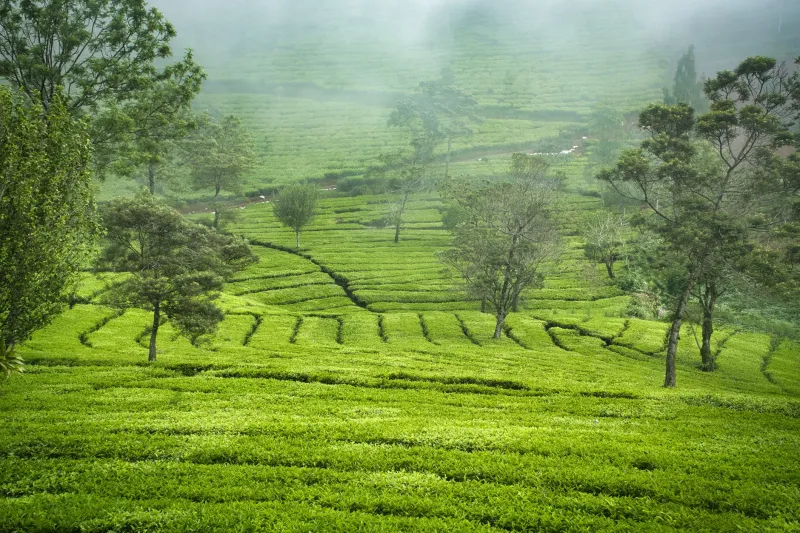
Photo: Mike Faherty, CC BY-SA 2.0, via Wikimedia Commons
American workplaces are not short on conflict. What they are frequently short on is the capacity to make conflict useful. In boardrooms, Slack channels, and team retrospectives from Seattle to Atlanta, disagreement tends to follow one of two dysfunctional scripts: it either gets suppressed in the name of harmony, producing the slow rot of groupthink, or it escalates into interpersonal damage that fractures teams and drives away talent. Neither outcome serves organizations well.
In Darjeeling, communities that have coexisted across Buddhist, Hindu, and indigenous Lepcha and Bhutia traditions for generations have developed something different: a sophisticated, culturally embedded practice of navigating disagreement that treats dissent not as a threat to be managed but as a resource to be cultivated. Increasingly, American organizations are paying close attention.
Disagreement as a Shared Discipline
The cultural foundations of Darjeeling's conflict practices are pluralistic by necessity. A community that includes Tibetan Buddhist monasteries, Hindu temples, and Lepcha animist traditions cannot afford a single, hegemonic framework for resolving disputes. What has emerged instead is a set of shared protocols that transcend any single tradition while drawing on the wisdom of all of them.
Central to these protocols is a distinction that many American organizations struggle to maintain: the difference between the person and the position. In Darjeeling's community councils and elder-mediated dispute processes, it is considered both possible and necessary to challenge an argument vigorously while preserving the dignity of the person advancing it. This is not merely a social nicety. It is a structural commitment, reinforced by the understanding that today's adversary in debate is tomorrow's neighbor, collaborator, and, in many cases, relative.
The practical mechanics vary by context. In some settings, a designated mediator—often an elder respected across community lines—facilitates a process in which each party must accurately summarize the opposing view before responding to it. In others, a cooling period is mandated before any binding decision is reached, ensuring that emotional intensity does not hijack deliberation. What these practices share is a refusal to treat speed as a virtue in conflict resolution.
What American Tech Companies Are Discovering
The adoption of Darjeeling-informed conflict practices in US organizational settings has been neither uniform nor simple. But several documented cases suggest that the underlying principles translate with surprising fidelity.
A mid-sized software development firm based in Austin, Texas, began working with an organizational consultant who had spent considerable time studying community governance practices in the Darjeeling hills. The firm was experiencing a pattern familiar to many technology companies: a culture in which senior engineers' opinions effectively foreclosed debate, junior team members self-censored to avoid friction, and product decisions were made with far less deliberation than their complexity warranted.
The consultant introduced what she called a "position-before-person" protocol in design reviews: before any critique of a proposed approach could be voiced, the critic was required to articulate the strongest possible case for that approach. The practice, adapted from Darjeeling's elder-mediated council processes, initially felt awkward and slow to the engineering team. Within two quarters, however, the firm reported a measurable increase in the number of alternative solutions surfaced during review sessions, a reduction in the number of design decisions that required costly revision post-launch, and—perhaps most significantly—a marked increase in contributions from team members who had previously remained silent in group settings.
Nonprofits and the Courage to Disagree
The nonprofit sector presents a different but equally instructive case. Organizations driven by mission often develop cultures in which disagreement is implicitly coded as disloyalty—a threat to the shared values that justify the organization's existence. The result is frequently a kind of enforced consensus that masks genuine strategic disagreement and leaves organizations poorly equipped to adapt when circumstances change.
A health-focused nonprofit operating in the Pacific Northwest engaged with Darjeeling community development practitioners through an international exchange program facilitated by APS Darjeeling. Staff members participated in structured dialogues modeled on the community assemblies common in the Darjeeling hills, in which participants are explicitly expected to voice reservations before consensus is declared. The experience was, by multiple accounts, initially uncomfortable. Organizational leaders who had grown accustomed to smooth agreement found the surfacing of genuine disagreement disorienting.
Over time, however, the nonprofit's leadership credited the practice with enabling a strategic pivot that had been blocked for years by unspoken internal opposition. By creating a legitimate channel for dissent, the organization had effectively unlocked decision-making capacity that its previous culture had suppressed.
The Psychological Safety Paradox
Much of contemporary American management literature focuses on psychological safety as a precondition for innovation and team performance. The research is robust: teams whose members feel safe to speak up without fear of punishment consistently outperform those governed by fear. What the literature is less clear about is how psychological safety is actually built and sustained—particularly in organizations that have already experienced significant interpersonal damage.
Darjeeling's conflict traditions offer a counterintuitive answer. Psychological safety, in these communities, is not produced by the absence of conflict. It is produced by the presence of reliable processes for navigating conflict honorably. When community members know that disagreement will be handled through established protocols that protect dignity and ensure all voices are heard, they become more willing—not less—to voice difficult truths.
This reframing has significant implications for American organizations. The instinct to reduce conflict in the name of harmony may, paradoxically, be producing exactly the kind of psychological unsafety it seeks to prevent. If team members know that raising a concern will trigger unmanaged emotional escalation or social penalty, they will not raise it. The solution is not to eliminate the conditions that produce disagreement—those conditions are inherent in any organization doing meaningful work—but to build the cultural infrastructure that makes disagreement productive.
Adapting Without Appropriating
A responsible account of Darjeeling's influence on American organizational practice must acknowledge the risks of decontextualization. The conflict practices that have evolved in Darjeeling's communities are not free-floating techniques. They are embedded in specific cultural, historical, and relational contexts that give them meaning and authority. Lifting them wholesale and transplanting them into American corporate settings without that context risks producing pale imitations that lack the cultural weight to actually change behavior.
The most effective adaptations observed in American settings share a common characteristic: they do not simply import Darjeeling's methods but engage seriously with the principles underlying them—the primacy of relational continuity, the distinction between person and position, the value of structured process over spontaneous reaction. Organizations that invest in understanding why these practices work, rather than merely copying what they look like, tend to produce adaptations that are genuinely transformative.
At APS Darjeeling, our commitment to connecting communities is grounded in the belief that genuine exchange requires genuine respect—for the depth of what is being shared and the complexity of what is being adapted. Darjeeling's traditions of productive disagreement are among the most valuable contributions these communities have to offer a world in urgent need of better ways to think together. They deserve to be engaged with the seriousness they have earned.