Stewardship Over Sacrifice: What Darjeeling's Culture of Limits Teaches American Professionals About Sustainable Work
There is a particular kind of exhaustion that has become almost aspirational in American professional life. Packed calendars, perpetual availability, the quiet pride of being the last one to leave. For many workers across the United States, the inability to say no has been repackaged as dedication. The consequences—chronic stress, diminished productivity, fractured personal lives—are well documented, yet the cultural machinery driving overcommitment remains largely intact.
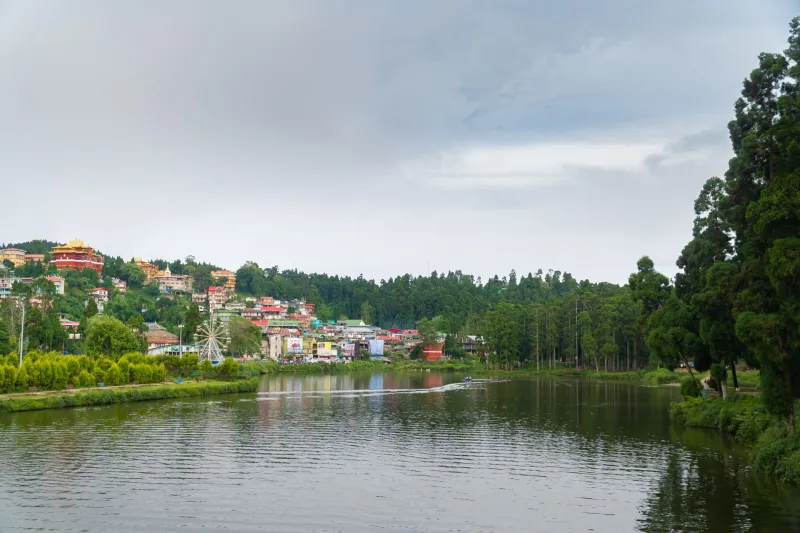
High in the Himalayan foothills of Darjeeling, a different logic governs how people relate to their obligations. It is a logic shaped not by ideology but by geography, agriculture, and generations of hard-won understanding about what happens when limits are ignored.
The Mountain as Teacher
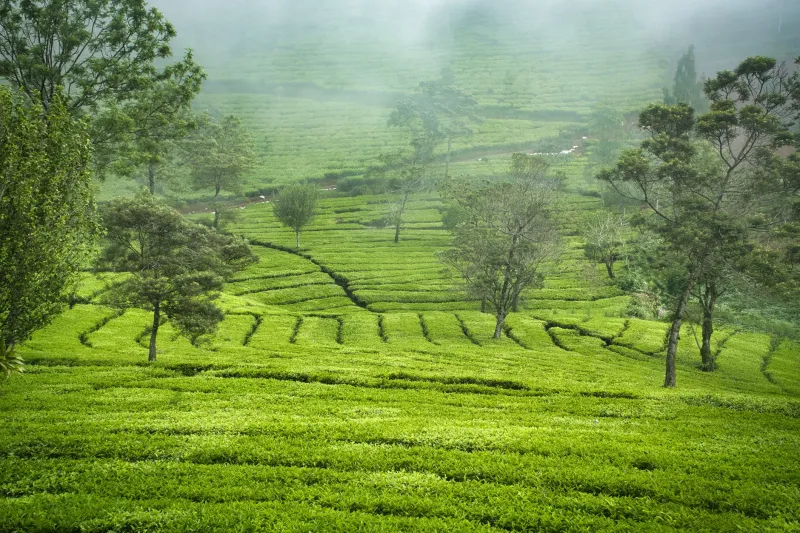
Darjeeling's terraced hillsides are among the most visually striking agricultural landscapes on earth. But those terraces are not merely aesthetic. They are an engineering response to a fundamental truth: that a slope without structure will not hold. Rainwater, left unmanaged, becomes erosion. Soil, left unanchored, becomes runoff. The terraces are, in essence, a system of deliberate limits—each one saying, this far and no further, so that what lies above may flourish.
For communities who have farmed these slopes for generations, the lesson is absorbed early and deeply. Boundaries are not barriers to productivity. They are the precondition for it.
"When I first visited Darjeeling to meet with cooperative farming leaders, I expected to talk about yield and export markets," said Marcus Ellroy, a supply chain director based in Portland, Oregon, who has worked with Darjeeling agricultural cooperatives for several years. "What I didn't expect was to come home and completely rethink how I was running my own team."
Ellroy describes a conversation with a senior cooperative manager who explained that the community's planting calendar was governed by strict seasonal cutoffs—not because external regulations demanded it, but because the community had collectively agreed that exceeding certain thresholds compromised the long-term health of the land. "He told me, 'We do not plant past the point where the soil can recover. That is not restriction. That is respect.'" Ellroy paused. "I realized I had never once applied that kind of thinking to my staff."
Limits as a Social Contract
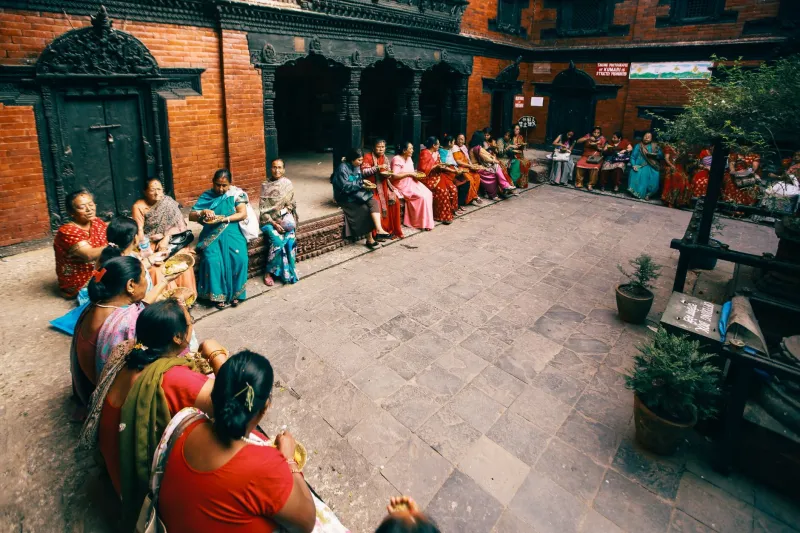
In Darjeeling's community structures, the concept of restraint extends well beyond agriculture. Social and familial roles carry clearly understood parameters—not as rigid hierarchies, but as mutually respected agreements about capacity and contribution. Elders are consulted on matters of long-term consequence; younger community members take the lead on implementation. Neither group is expected to carry the full weight of both roles simultaneously.
This division is not born of limitation but of recognition: that each person, like each terrace on a hillside, can only hold so much before the structure fails.
American workplace culture, by contrast, has long celebrated the generalist hero—the executive who manages upward, downward, and sideways; the employee who volunteers for every initiative; the team lead who never delegates. The result, organizational psychologists increasingly note, is not a culture of excellence but one of diffuse accountability and invisible burnout.
"We talk a lot about resilience in the corporate world," said Dr. Priya Nambiar, an organizational consultant in Chicago who has incorporated frameworks drawn from South Asian community governance into her practice. "But resilience isn't the ability to absorb unlimited stress. It's the capacity to recover. And recovery requires limits."
Nambiar points to what she calls the "stewardship reframe"—a concept she partially attributes to her research on Darjeeling's community decision-making structures. "In these communities, saying 'I cannot take this on' is understood as protecting the collective outcome, not abandoning it. That distinction is profound. It shifts the moral weight entirely."
From Principle to Practice: American Executives Who Made the Shift
For some American leaders, exposure to Darjeeling's organizational philosophy has been a catalyst for concrete workplace changes.
Rachel Okonkwo, a vice president at a mid-sized technology firm in Austin, Texas, traveled to Darjeeling as part of a leadership development program and returned with what she describes as a fundamentally altered view of her own role. "I had been operating under the assumption that availability equaled commitment," she said. "Watching how community leaders in Darjeeling managed their time and obligations made me question that entirely. They were deeply committed—but they were also very clear about what they would and would not take on. And their communities were better for it."
Okonkwo subsequently restructured her team's meeting cadence, eliminated the expectation of after-hours email responses, and introduced what she calls "capacity conversations"—regular one-on-ones focused not on deliverables but on workload sustainability. Employee retention on her team improved measurably within a year.
Similar shifts have been reported by other professionals who have engaged with Darjeeling's community networks through APS Darjeeling's partnership and exchange programs. The common thread is not a wholesale adoption of Himalayan cultural practices—context matters, and transplantation is rarely straightforward—but rather a reorientation of values. Limits, in this view, are not concessions. They are commitments to quality, longevity, and genuine care.
The People-Pleasing Trap and Its Costs
Psychological research on people-pleasing behavior consistently links it to diminished self-efficacy, increased anxiety, and paradoxically, lower perceived trustworthiness over time. When professionals agree to everything, colleagues and supervisors often come to sense—consciously or not—that the agreement lacks integrity. The yes that cannot be trusted is ultimately less valuable than the no that can.
Darjeeling's community ethos offers an antidote to this cycle. In a culture where collective sustainability is a lived value rather than a corporate talking point, the ability to articulate limits is not merely tolerated—it is respected. A cooperative member who overextends and burns out does not serve the cooperative. A farmer who plants beyond the soil's capacity does not feed the community longer. The logic is circular and self-reinforcing: restraint is abundance, properly understood.
"There is a word in Nepali, 'pugcha,'" noted community development researcher Anil Thapa in a recent forum hosted by APS Darjeeling. "It means, roughly, 'it is enough.' It is not a word of defeat. It carries dignity. We have lost something in cultures that have no equivalent."
Building a Culture That Can Hold
For American organizations seeking to operationalize these insights, the entry point is less about policy than about language and modeling. When senior leaders articulate their own limits clearly and without apology, they signal that the organization values sustainability over performance theater. When managers ask team members not just what they are working on but what they are declining to take on, they normalize the exercise of judgment.
The terraced hillsides of Darjeeling did not emerge from a single decision. They were built incrementally, each layer reinforcing the one below, over generations of careful observation and collective agreement. A workplace culture that holds—one that retains talent, produces consistently, and sustains the people within it—is built the same way.
The mountain, it turns out, has always known something the modern office is only beginning to learn: that what you choose not to carry is as important as what you do.