Yielding to the Storm: What Darjeeling's Monsoon Culture Reveals About Leading Through Uncertainty
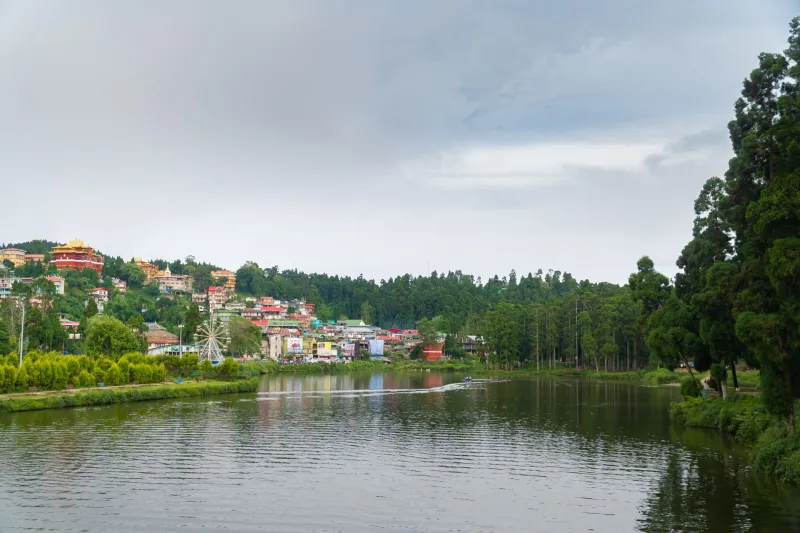
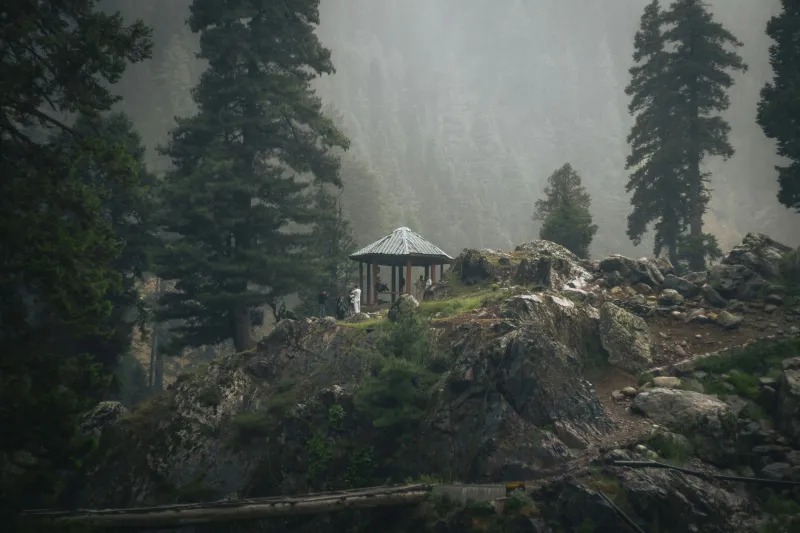
Every year, between June and September, Darjeeling transforms. The skies that once offered clear panoramas of Kanchenjunga close over in thick, rolling cloud. Rain arrives not as a passing inconvenience but as a sustained, often violent presence—washing out roads, saturating tea gardens, and reshaping the landscape with a force that no infrastructure project has ever fully tamed. For those unfamiliar with life at altitude, it can look like chaos. For those who have lived here for generations, it looks like a calendar.
This distinction—between perceiving weather as catastrophe and perceiving it as cycle—sits at the heart of a quietly influential philosophy that has emerged from Darjeeling's hillside communities. And increasingly, it is drawing the attention of American business leaders who find that their own tools for managing uncertainty are failing them.
The Monsoon as Mentor
In conventional American corporate culture, uncertainty is framed as a problem awaiting a solution. Entire consulting industries have been built around the promise of reducing risk, forecasting volatility, and insulating organizations from surprise. The implicit message is clear: unpredictability is the enemy, and the goal of good leadership is its elimination.
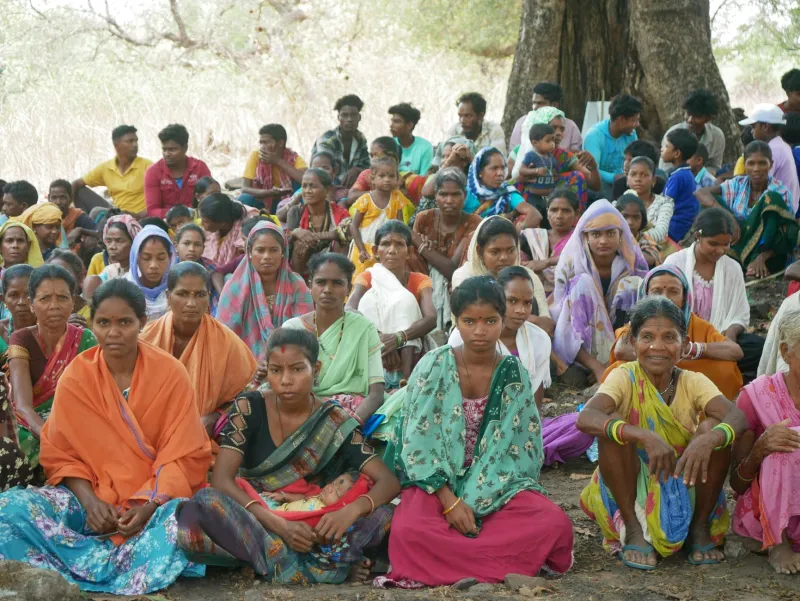
Darjeeling's communities have never had the luxury of that assumption. The monsoon arrives on its own terms. It does not negotiate. And yet, far from producing paralysis, this reality has cultivated a distinctive operational intelligence among farmers, cooperative managers, local administrators, and small business owners throughout the region.
"We do not wait for certainty to begin," says a senior agricultural cooperative leader in the Mirik Valley. "We prepare for what we know is coming, we build flexibility into everything we do, and we accept that some things will be decided by the rain, not by us. That acceptance is not weakness. It is the beginning of real planning."
This orientation—what might be called monsoon thinking—is neither fatalism nor passivity. It is a disciplined, experience-tested framework for operating within systems that are inherently dynamic.
Reading the Signs, Not the Forecasts
One of the more striking contrasts between Darjeeling's community-based decision-making and American executive practice involves the relationship with data. In US corporate environments, the appetite for precise forecasting is enormous. Quarterly projections, scenario modeling, and risk matrices are standard tools, often creating an illusion of control that can prove more dangerous than acknowledged uncertainty.
In Darjeeling's hillside communities, the emphasis falls elsewhere—on pattern recognition, on accumulated observational knowledge, and on early signals that indicate how a season is likely to unfold. Tea garden supervisors watch the behavior of soil moisture weeks before the first rains. Village elders track wind direction and cloud formation with a literacy that no app has yet replicated. Infrastructure committees begin pre-positioning materials and labor not when the forecast is certain, but when the signs suggest it is probable.
This is not anti-scientific thinking. It is a practical acknowledgment that in complex, living systems, precise prediction is often less valuable than adaptive readiness. The goal is not to know exactly what will happen, but to be capable of responding well to a range of possibilities.
For American leaders navigating supply chain disruptions, geopolitical shifts, or rapidly evolving consumer behavior, this distinction carries real operational weight.
Building Organizations That Breathe
Perhaps the most structurally significant lesson from Darjeeling's monsoon culture involves the architecture of organizations themselves. Communities here do not build for a single meteorological reality. They build for two: the dry season and the wet. Infrastructure, workflows, social support systems, and economic activities are all designed with seasonal alternation in mind. The monsoon does not interrupt the plan—it is part of the plan.
This dual-mode thinking stands in sharp contrast to how most American organizations are structured. The dominant model assumes a relatively stable operating environment, with contingency planning treated as an afterthought rather than an integrated design principle. When disruption arrives—as it inevitably does—organizations scramble to adapt systems that were never built for flexibility.
Community development practitioners in Darjeeling have long argued that resilience is not something you add to an organization after the fact. It is something you design in from the beginning, by acknowledging that disruption is not an exception but a recurring feature of the environment.
"Every structure we build, we ask: what does this look like in the rain?" explains a local civil engineer involved in community infrastructure projects across the district. "If it only works in good conditions, it is not finished yet."
Applied to organizational design, this question becomes a powerful diagnostic. What does your team's communication structure look like under pressure? What does your supply chain look like when a key supplier fails? What does your leadership culture look like when the quarter goes sideways? If the honest answer is "we haven't thought that through," the monsoon mind would suggest the design is incomplete.
Renewal as Strategy
There is another dimension to Darjeeling's monsoon orientation that American leadership culture tends to overlook entirely: the acknowledgment that disruption carries generative potential. The monsoon does not merely challenge Darjeeling—it sustains it. The rains replenish aquifers, restore soil nutrients, and create the precise growing conditions that give Darjeeling tea its globally celebrated character. Without the storm, there is no harvest.
This understanding—that periods of intensity and apparent disorder can be necessary preconditions for growth—runs counter to the prevailing American instinct to minimize downtime, eliminate slow periods, and treat any pause in productivity as waste.
Organizational psychologists have increasingly argued that this instinct is counterproductive. Teams that are never allowed to consolidate, reflect, or recover tend to underperform over time, regardless of how efficiently they appear to function in the short term. The monsoon model, by contrast, builds recovery into the annual rhythm as a non-negotiable feature—not a reward for good performance, but a structural requirement for sustained capacity.
Some forward-thinking American companies have begun experimenting with analogous practices: scheduled periods of reduced output following intense project cycles, deliberate pauses built into product development timelines, and leadership retreats designed not for strategic planning but for genuine decompression. Whether or not they would frame it in these terms, they are, in essence, learning to work with the rain.
Practical Takeaways for American Leaders
The distance between Darjeeling and a corporate boardroom in Chicago or Seattle is considerable. But the principles embedded in monsoon culture translate with surprising directness.
First, reframe uncertainty as a structural feature of your environment rather than a temporary problem to be solved. Build your planning processes around ranges of possibility rather than single-point forecasts.
Second, invest in pattern recognition alongside data collection. Quantitative models are valuable, but they are most powerful when combined with the kind of qualitative, experiential knowledge that comes from paying close attention over time.
Third, design your organization for alternation—between intensity and recovery, between expansion and consolidation. Treat the quieter periods not as inefficiencies but as essential phases in a longer cycle.
Finally, and perhaps most importantly, resist the impulse to treat every storm as a crisis. Some disruptions are not anomalies. They are the weather. And the communities that thrive are the ones that have learned, over generations, to read the sky—and prepare accordingly.
At APS Darjeeling, we believe that the region's accumulated community intelligence holds lessons that extend far beyond its borders. The monsoon mind is one of the most compelling examples of that wisdom—and its moment in American leadership culture may have finally arrived.