What American Boardrooms Can Learn From a Himalayan Village: Darjeeling's Living Knowledge Networks

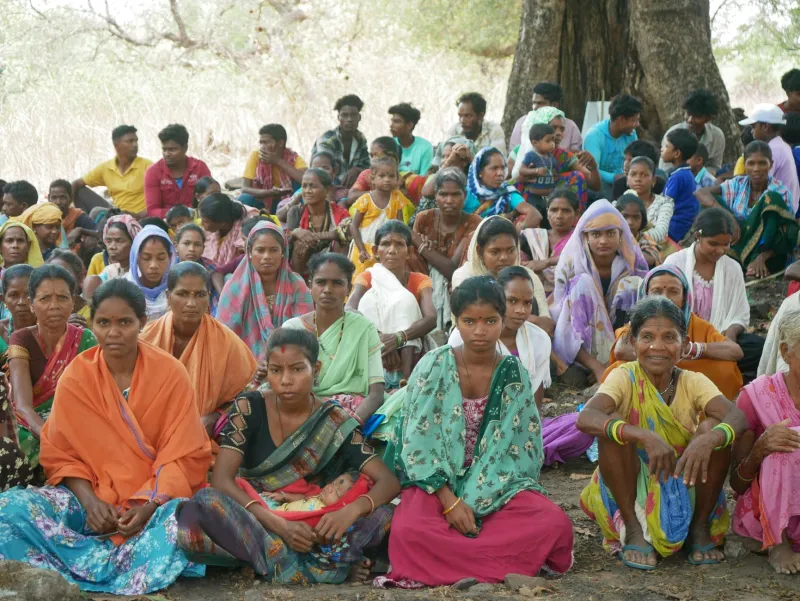
In the fog-wrapped neighborhoods of Darjeeling, knowledge has never been the exclusive property of the credentialed or the senior. It moves. It circulates between a retired tea garden supervisor and a twenty-two-year-old apprentice, between a grandmother who has cultivated cardamom for four decades and a teenage grandson experimenting with new drying techniques. No formal syllabus governs this exchange. No consultant invoices follow it. It simply happens—embedded in daily life, shaped by mutual respect, and reinforced by a community that understands collective competence as a survival strategy.
This is the system that an increasing number of American organizations are attempting to replicate, and the early evidence suggests they are onto something significant.
The Problem With How America Trains Its Workforce
The United States spends approximately $100 billion annually on corporate training, according to research from the Association for Talent Development. Despite that staggering investment, employee engagement and retention figures remain stubbornly disappointing. Gallup's most recent workplace surveys indicate that roughly two-thirds of American workers feel disengaged from their jobs. A significant body of research now suggests that formal, lecture-driven training programs—the dominant model in US workplaces—produce knowledge that evaporates quickly and rarely translates into changed behavior on the job.
The issue, organizational psychologists have argued for years, is not the content of these programs but their structure. Learning that occurs in isolation from real work, delivered in a compressed timeframe by an outside facilitator, struggles to compete with knowledge that is earned through repeated, relational experience. This is precisely where Darjeeling's informal networks offer a counterpoint worth examining.
How the Darjeeling Model Actually Functions
APS Darjeeling has observed and documented the region's knowledge-sharing culture across multiple community sectors, from agriculture and tea cultivation to small enterprise development and local governance. What distinguishes Darjeeling's approach is not any single program or institution—it is a set of underlying principles that govern how expertise is recognized and transferred.
First, knowledge in Darjeeling's communities is understood to be multidirectional. Elders hold deep contextual wisdom, but younger community members regularly introduce technical skills, market awareness, and adaptive thinking that older generations find genuinely valuable. The exchange is reciprocal rather than hierarchical. Second, learning occurs in the context of actual work. A younger farmer does not sit through a presentation on soil management; she works alongside someone who has managed that soil for thirty years, asking questions as real problems arise. Third, the community itself validates and reinforces new knowledge. When a technique proves effective, it spreads laterally through peer networks with remarkable efficiency.
These are not exotic or culture-specific phenomena. They are, at their core, conditions that any organization can attempt to create.
American Companies Piloting the Approach
Several US firms have begun designing internal programs explicitly modeled on what organizational development consultants are now calling "embedded mentorship networks"—a framework that traces its conceptual roots, in part, to studies of knowledge transfer in South Asian highland communities.
A mid-sized manufacturing company in Ohio restructured its onboarding process in 2022 after leadership attended a professional development retreat that included a module on community learning systems in the Darjeeling region. Rather than assigning new hires to a two-week orientation program, the company paired each new employee with two internal guides: one a veteran with deep institutional knowledge, the other a relatively recent hire who could speak to contemporary challenges without the filter of long-established habit. Eighteen months later, the company reported a 34 percent reduction in first-year turnover and a measurable improvement in cross-departmental communication.
A healthcare technology startup based in Austin, Texas, took a different approach. Drawing on frameworks shared during a partnership with a Darjeeling-based community development organization, the company dismantled its formal performance review process and replaced it with a continuous peer-learning structure in which employees at every level were expected both to teach and to learn within defined project cycles. Managers reported that junior employees were surfacing process improvements at nearly twice the rate they had under the previous system.
Neither of these companies simply imported a cultural practice wholesale. They adapted principles—reciprocal learning, contextual knowledge transfer, community validation—to their specific organizational contexts. That adaptability is itself a feature of the Darjeeling model, which has never relied on rigid structure.
The Retention and Innovation Dividend
The business case for this approach extends beyond employee satisfaction, though satisfaction matters. Organizations that have piloted embedded mentorship networks report measurable gains in two areas that directly affect competitive performance: retention and innovation.
Retention improvements are intuitive. Employees who feel that their existing knowledge is valued—regardless of their tenure or title—are less likely to disengage. The Darjeeling model's insistence on bidirectional expertise addresses a chronic frustration among younger American workers who report feeling that their skills are underutilized and their perspectives dismissed. When a company signals, through its actual practices, that a 26-year-old's fluency with data visualization is as organizationally valuable as a 54-year-old's client relationship history, both employees become more invested.
The innovation dividend is less obvious but equally compelling. Hierarchical knowledge systems tend to concentrate problem-solving authority among senior staff, which means that the people closest to operational challenges—often the newest or most junior employees—have limited channels through which to surface solutions. Darjeeling's community networks have never operated this way. A young cooperative member who identifies a more efficient harvesting method is not required to wait for institutional permission to share it. The idea moves through the network on its own merits. Companies that replicate this dynamic find that their internal idea pipelines become significantly more active.
What This Means for American Professional Development
The implications are not that American companies should replace all structured training with informal conversation. Context, compliance requirements, and technical complexity all demand some degree of formal instruction. The more useful takeaway is that formal training programs are dramatically more effective when they are embedded within ongoing, relational learning cultures—exactly the kind of culture that Darjeeling's communities have sustained without corporate budgets or consulting contracts.
For HR professionals and organizational leaders, the practical question is how to engineer the conditions for that culture: how to create legitimate space for junior employees to teach, how to reward knowledge-sharing rather than knowledge-hoarding, and how to build enough psychological safety that learning can happen continuously rather than only during scheduled sessions.
Darjeeling's hill communities did not design these conditions through strategic planning. They evolved them over generations in response to the demands of a challenging environment. American organizations face their own demanding environment—volatile markets, rapid technological change, an increasingly mobile workforce. The pressures are different, but the underlying human need for connected, contextual, reciprocal learning is identical.
A Model That Travels Well
APS Darjeeling's work in documenting and supporting the region's community development practices has consistently highlighted the transferability of local knowledge systems to wider contexts. The mountain mentorship tradition is among the most transferable of these systems precisely because it depends not on geography or cultural specificity but on a set of relational commitments that any community—including a professional one—can choose to make.
The companies beginning to make those commitments are discovering what Darjeeling's communities have long understood: that an organization in which everyone is simultaneously a teacher and a student is more resilient, more innovative, and more human than one in which knowledge flows in only one direction.
That is not a small lesson. And it did not require a hundred-billion-dollar training budget to learn.