Mountain Quiet as a Competitive Edge: How Darjeeling's Contemplative Work Culture Is Challenging America's Obsession With Constant Connectivity
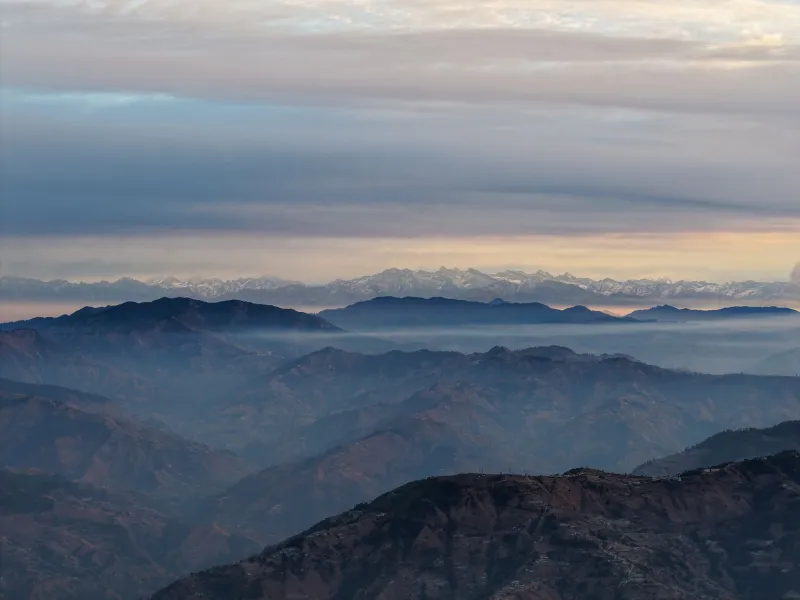
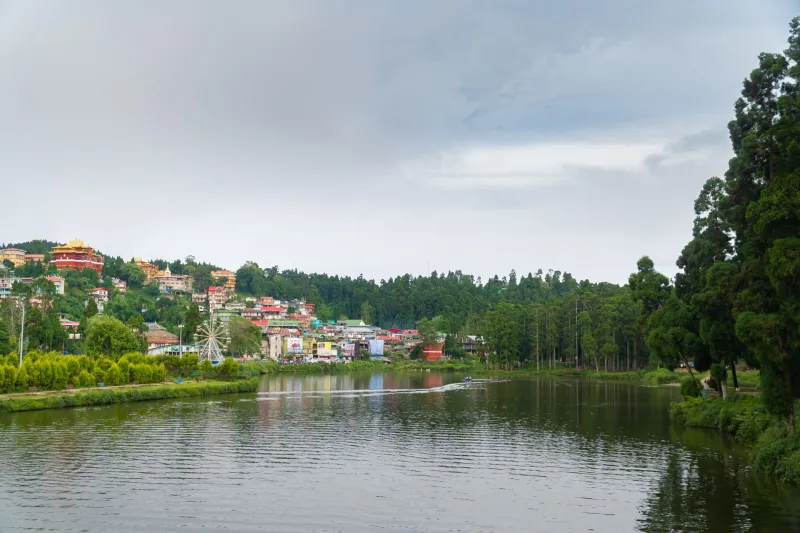
Somewhere between the third Slack notification of the morning and the fourth impromptu meeting of the afternoon, American productivity quietly collapses. Open-plan offices, once celebrated as engines of collaboration and innovation, have generated a growing body of evidence suggesting the opposite: that constant ambient noise, visual interruption, and digital fragmentation are eroding the very cognitive capacities that organizations depend upon most. Darjeeling, perched at over 6,000 feet in the eastern Himalayas, offers a strikingly different model — one rooted not in productivity software or management theory, but in the physical and cultural architecture of silence itself.
For the communities that APS Darjeeling serves and represents, quietude has never been a luxury. It has been a condition of life, woven into the rhythms of agricultural work, spiritual practice, and community deliberation for generations. What is now drawing the attention of American remote workers, organizational psychologists, and corporate wellness professionals is the recognition that this quietude may constitute a genuine competitive advantage — one that can be studied, adapted, and, to a meaningful degree, replicated.
The Neuroscience of Noise — and Its Absence
Research conducted over the past two decades has progressively dismantled the assumption that a buzzing, socially active workspace is a productive one. Studies published in the Journal of Applied Psychology and the Journal of Environmental Psychology have consistently found that uncontrolled ambient noise degrades performance on complex cognitive tasks, elevates cortisol levels, and reduces workers' willingness to engage in the kind of sustained, effortful thinking that generates original ideas.
Conversely, neuroscientists studying the default mode network — the brain system most active during deep reflection, creative synthesis, and long-range planning — have found that it requires periods of low external stimulation to function optimally. In practical terms, this means that the brain's most sophisticated capabilities are not switched on by stimulation. They are unlocked by its reduction.
Darjeeling's environment provides this reduction almost involuntarily. The region's geography muffles urban din. Its cultural traditions, shaped in part by Buddhist and Hindu contemplative practices, have long encoded regular periods of quiet into daily and seasonal life. Workers here are not struggling against their environment to find focus. Their environment, in many respects, delivers it.
Voices From the Altitude: Remote Workers Who Made the Move
Over the past several years, a modest but notable cohort of American remote workers has relocated to Darjeeling, drawn initially by cost of living and natural beauty, but retained — many report — by something less tangible and more transformative.
Marcus Ellroy, a software architect from Austin, Texas, spent three months working from a co-working space in Darjeeling's Chowrasta district in 2022. "I expected the scenery," he said. "I did not expect to finish a project in six weeks that I had been circling for four months back home. The quiet wasn't just pleasant. It was structural. It changed what I was capable of."
Similar accounts surface repeatedly among the growing community of location-independent professionals who have spent extended periods in the region. They describe not merely an absence of distraction, but the emergence of a different cognitive tempo — one characterized by longer attention spans, more deliberate decision-making, and what several described as a renewed appetite for genuinely difficult intellectual problems.
Lena Vasquez, a UX researcher from San Francisco, noted that her relationship with her own work changed within weeks of arriving. "In the Bay Area, I was always reacting. Here, I started initiating again. I had the mental space to think three steps ahead instead of just responding to whatever was most urgent."
Darjeeling's Contemplative Infrastructure
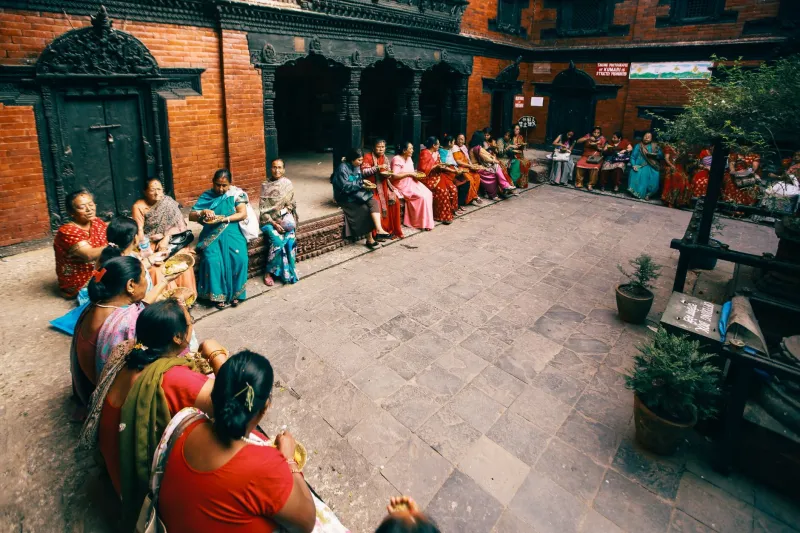
What distinguishes Darjeeling's approach from mere geographic good fortune is the degree to which its communities have actively cultivated and preserved conditions conducive to concentrated thought. Local governance structures, many of which APS Darjeeling has documented and supported, include formal provisions for community deliberation that prioritize reflective input over rapid consensus. Meetings are not designed to be brief. They are designed to be thorough.
Many households and community centers in the region maintain spaces explicitly designated for quiet activity — reading, writing, prayer, or simply thinking. These are not afterthoughts. They are architectural and cultural commitments, passed down and maintained with the same intentionality that American organizations might apply to their conference room schedules.
Local educators have also long emphasized what might be called contemplative literacy — the practiced ability to sit with a difficult question without rushing toward resolution. Students in several of Darjeeling's community schools are taught techniques for sustained attention as a core academic skill, not a supplementary wellness initiative.
What American Organizations Can Realistically Adopt
The lessons Darjeeling offers are not contingent on relocation to the Himalayas. They are translatable — though translation requires genuine organizational will, not merely the installation of a meditation app on the company server.
Designate protected silence zones. Several forward-thinking American companies, including firms in Chicago, Seattle, and New York, have begun carving out physical spaces where no meetings, phone calls, or casual conversation are permitted during specified hours. These are not libraries in the traditional sense — they are purpose-built cognitive sanctuaries. Research from the University of Illinois suggests that even ninety minutes of uninterrupted focus per day can dramatically improve output quality on complex tasks.
Restructure notification protocols. Darjeeling's workers are not managing seventeen simultaneous communication channels. American organizations that have experimented with designated "communication windows" — specific times when messages are sent and checked, rather than a continuous stream — report significant reductions in reported stress and measurable improvements in task completion rates.
Introduce deliberate transition rituals. Many of Darjeeling's community practices include brief transitional moments between activities — a short walk, a period of stillness, a cup of tea consumed without accompanying screens. Neuroscience supports the value of these transitions: they allow the brain to consolidate information and reset attentional resources. Organizations can institutionalize these moments without significant cost.
Reconsider the open office as a default. The open-plan workspace was designed for a particular vision of collaborative work. It is poorly suited to the kind of deep, individual cognitive labor that generates research breakthroughs, complex designs, and strategic plans. A hybrid spatial model — open zones for collaborative activity, closed or semi-enclosed zones for concentrated work — more accurately reflects the full range of tasks that knowledge workers perform.
Pilot remote arrangements in lower-stimulation environments. Several American firms have begun experimenting with structured retreats to quieter locations — not as team-building exercises, but as dedicated deep-work periods. Darjeeling has emerged as one of several international destinations that organizations are beginning to consider for this purpose, given its infrastructure, its growing community of professional expatriates, and its cultural orientation toward reflective work.
A Different Measure of Output
Perhaps the most enduring lesson Darjeeling offers is not a technique but a reorientation. In communities where silence is valued as a productive state rather than an unproductive one, the measure of a good workday is not the number of messages answered or meetings attended. It is the quality and depth of what was actually produced.
American organizations are increasingly confronting the gap between activity and output — between the performance of busyness and the reality of meaningful work. Darjeeling's communities, shaped by geography, tradition, and deliberate cultural choice, have long operated on the far side of that distinction.
The mountains do not rush. And in their unhurried altitude, they may be offering the American workplace one of the most practically useful insights of this generation: that the capacity to think deeply is not a personality trait. It is an environmental condition. And environments, unlike personalities, can be designed.