Seasons of Reckoning: What Darjeeling's Ancient Preparation Culture Teaches American Communities About Climate Resilience
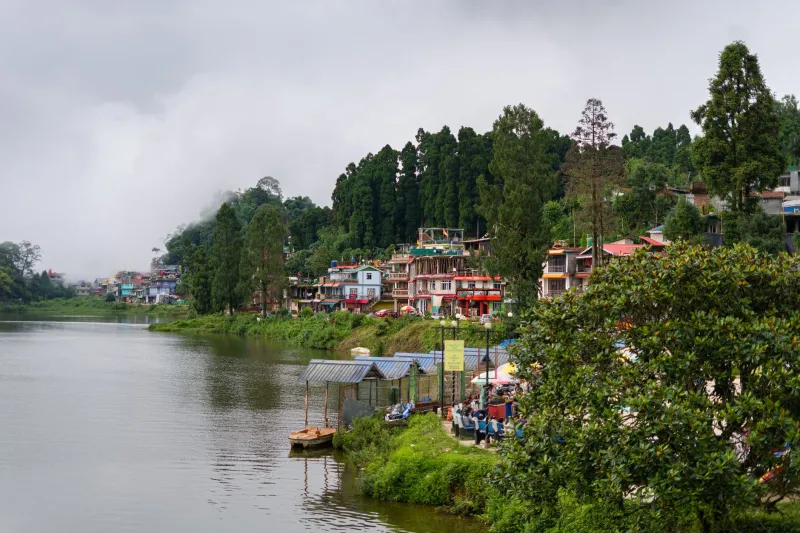
Every year, as warm air masses rise from the Bay of Bengal and collide with the Himalayan foothills, Darjeeling braces itself. Landslides scour mountain roads. Rivers swell beyond recognition. Tea gardens flood, roads collapse, and entire hillside neighborhoods become temporarily isolated from the rest of the world. This is not a crisis. This is June.
For the communities of Darjeeling, the monsoon is not an emergency to be managed — it is a known season to be prepared for. That distinction, seemingly subtle, carries profound implications for how American communities might rethink their own approach to climate-related risk in an era when wildfires, hurricanes, and extreme flooding are becoming routine rather than exceptional.
Preparation as a Cultural Practice, Not a Policy Mandate
In the United States, disaster preparedness is largely institutional. Federal Emergency Management Agency guidelines, municipal emergency protocols, and corporate business continuity plans form the backbone of how American organizations respond to natural crises. These frameworks are valuable — but they are fundamentally reactive, designed to activate after a threshold is crossed.
In Darjeeling, preparation is woven into the social fabric long before any government directive is issued. Households begin reinforcing drainage channels weeks before the first rains arrive. Village elders consult generational knowledge about which slopes are historically prone to slippage. Community groups organize informal networks for sharing food stores, tools, and labor. The preparation is not prompted by an official warning; it is prompted by the calendar.
This distinction — between preparation as policy and preparation as culture — is precisely what American urban planners, emergency managers, and organizational leaders are beginning to take notice of. When resilience is embedded in daily community behavior rather than activated by institutional triggers, response times shrink, coordination improves, and psychological stress diminishes significantly.
The Architecture of Anticipation
Darjeeling's preparation systems are neither primitive nor improvised. They reflect centuries of accumulated observation, trial, and refinement. Several specific practices stand out as particularly instructive for American contexts.
Distributed resource caching is one of the most immediately transferable concepts. Rather than relying on centralized emergency stockpiles — a model vulnerable to single points of failure — Darjeeling communities maintain dispersed stores of essential goods across multiple households and community nodes. When a landslide cuts off a neighborhood, local reserves are already in place. American emergency planners in high-risk zones, particularly in rural or semi-rural areas prone to wildfire or flood isolation, have begun exploring analogous neighborhood-level caching models with promising early results.
Seasonal infrastructure maintenance cycles represent another practice with direct American applicability. In Darjeeling, the months preceding the monsoon are understood as a mandatory period for repairing retaining walls, clearing culverts, and reinforcing terraced farmland. This is not optional maintenance — it is socially expected and collectively enforced. Contrast this with American infrastructure management, which frequently defers maintenance until failure occurs. The economic and human costs of that deferral pattern have become painfully evident in communities across the Gulf Coast, the Pacific Northwest, and the Midwest.
Intergenerational knowledge transmission is perhaps the most underappreciated element of Darjeeling's resilience architecture. Older community members serve as living repositories of historical climate behavior — recalling which monsoon seasons produced catastrophic slides, which microclimates tend to flood first, and which early environmental signals indicate an unusually severe season ahead. This oral and observational knowledge complements modern meteorological data in ways that no algorithm has yet replicated. American communities with deep indigenous or multi-generational roots possess similar reservoirs of local environmental knowledge, much of which remains formally unrecognized in official planning processes.
Psychological Resilience: Normalizing the Extraordinary
Beyond logistics, Darjeeling's monsoon culture cultivates a specific psychological orientation toward recurring hardship — one that American mental health professionals and organizational psychologists are beginning to study with genuine interest.
The concept might be described as grounded anticipation: the capacity to acknowledge that disruption is coming, to prepare thoroughly, and then to continue living normally in the interim without succumbing to chronic anxiety. This stands in sharp contrast to the psychological pattern increasingly observed in American communities facing climate risk, where uncertainty about the timing and severity of disasters produces prolonged stress, decision paralysis, and community fracture.
Darjeeling's cultural framing of the monsoon as a natural rhythm rather than an existential threat does not minimize the genuine danger it presents. Rather, it places that danger within a comprehensible, cyclical narrative — one in which the community has agency, preparation has meaning, and recovery is an expected chapter rather than an open question. Mental health researchers working with climate-affected American communities have noted that similar narrative frameworks, when deliberately cultivated, measurably reduce anxiety and improve collective coping capacity.
Community Coordination Without Bureaucracy
One of the most striking features of Darjeeling's preparation culture is how much coordination occurs outside formal institutional structures. Neighborhood associations, tea garden cooperatives, religious organizations, and informal social networks all play active roles in monsoon preparation — organizing labor, sharing information, and supporting vulnerable households — without waiting for municipal direction.
This horizontal coordination model has significant implications for American communities, particularly those in which trust in government institutions has eroded or in which formal emergency management capacity is limited by budget constraints. Cities like Houston, New Orleans, and Phoenix — each facing distinct but severe climate challenges — have experimented with community-led resilience hubs that echo Darjeeling's distributed coordination approach. Early evidence suggests these hubs outperform purely top-down models in reaching marginalized populations and maintaining function during the acute phase of a crisis.
Translating the Himalayan Model
Adapting Darjeeling's preparation culture for American contexts is not a matter of direct replication. The specific practices are shaped by terrain, climate, social structure, and centuries of lived experience that cannot simply be transplanted. What can be translated, however, are the underlying principles: make preparation habitual rather than reactive; distribute resources and responsibility across the community rather than concentrating them institutionally; honor and integrate generational knowledge alongside technical expertise; and cultivate a psychological culture that normalizes resilience rather than dramatizing crisis.
For American municipalities, corporations, and civic organizations navigating an era of accelerating climate volatility, these principles represent not a romantic appeal to tradition but a pragmatic reorientation of priorities. The communities of Darjeeling have been stress-tested by the Himalayas for generations. Their survival is not accidental.
At APS Darjeeling, we believe that the knowledge embedded in this region's communities deserves recognition not only as cultural heritage but as practical wisdom — the kind that American planners, policymakers, and organizational leaders can draw on as they build the resilient systems their own communities will increasingly depend upon.
The monsoon does not negotiate. Neither does climate change. The question is whether preparation becomes a culture before the season arrives.