Done by Dark: The Himalayan Meeting Discipline That Could Rescue America's Calendar
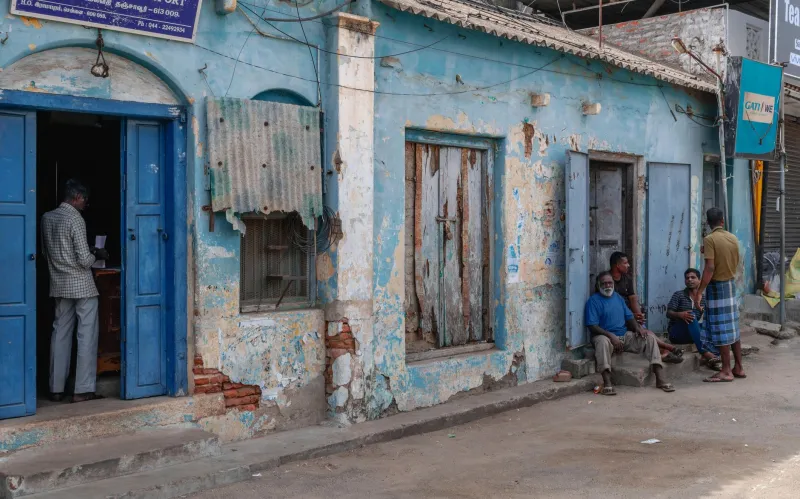
Every other Thursday, when the light begins to fade behind Kanchenjunga, residents of Darjeeling's ward committees gather in rooms the size of a generous American living room. They discuss water repairs, school fees, festival budgets, and disputes between neighbors. Then, within roughly two hours, they conclude — with decisions recorded, responsibilities assigned, and everyone walking home in the dark having actually accomplished something.
Contrast that with the American workplace, where the average employee now spends nearly a third of the workweek in meetings, and where a recent Microsoft analysis of collaboration data found that the typical Teams user's calendar is chained to back-to-back calls with no breaks at all. Meeting bloat has become the quiet crisis of knowledge work, and the remedies being pitched by Silicon Valley — AI notetakers, asynchronous everything — treat the symptom while ignoring a simpler truth: some communities simply run better meetings.
The Constraint That Creates Clarity
What makes Darjeeling's assembly culture so effective is not technology or training. It is constraint. Mountain towns cannot afford ambiguity. If a water line needs repairing before the monsoon, the decision must be made in the room, by the people who will live with it, before everyone walks home down a steep road without streetlights.
"There's an accountability that comes from geography," says Dr. Priya Raman, a remote collaboration researcher who studies distributed teams. "In Darjeeling's ward meetings, everyone present is a stakeholder with a face. In a 40-person Zoom gallery, accountability dissolves into rectangles."
The structures themselves are instructive. Ward assemblies typically follow a fixed agenda circulated in advance. Speaking order is respected rather than negotiated. The person who raises an issue is often the person tasked with shepherding its solution — a built-in antidote to the drive-by objection that derails so many American standups.
What US Teams Could Borrow Tomorrow
None of this requires a plane ticket. Collaboration consultants who work with distributed American companies point to several transferable protocols:
Publish the agenda, or there is no meeting. In Darjeeling's assemblies, showing up without knowing the agenda is unthinkable. US teams could adopt the same rule: no agenda, no invite, and anyone can decline without explanation.
Default to decision, not discussion. Mountain assemblies convene when something must be decided. American teams convene when something might someday be discussed. Flipping that default — every meeting ends with a documented decision, an owner, and a date — would eliminate a staggering share of recurring calls.
Time-box by daylight. The two-hour town hall ends when it ends, because the walk home is real. Some US companies have experimented with "hard stop" cultures, but few enforce them. A meeting that cannot conclude in its allotted time gets rescheduled with a narrower scope.
Rotate the chair. Ward meetings distribute facilitation among residents, which surfaces quiet voices and prevents the loudest personality from owning the room. Rotating facilitation is one of the cheapest interventions a US team can make, and one of the most neglected.
The Deeper Lesson: Presence Over Performance
There is also a cultural dimension that resists easy replication. In Darjeeling's meeting culture, silence is participation. Elders speak briefly because brevity signals seriousness. Consensus is pursued before votes, not after them. American professionals steeped in "speaking up" as a performance metric often misread this quietness as disengagement, when it is in fact a different theory of what a meeting is for.
"The best-run meetings I've ever sat in were in a hill town with unreliable electricity," recalls one American consultant who spent a year working with a Darjeeling nonprofit. "Nobody performed. Nobody multitasked. You were either there or you weren't."
That standard — full presence for a bounded hour — may be the most valuable import of all. As US companies reconsider return-to-office mandates, hybrid norms, and the four-day week, the question worth asking is not where meetings happen but whether they deserve to happen at all.
Darjeeling's town halls run two hours because the community cannot afford waste. American calendars are bloated because, so far, no one has been forced to pay. The Himalayas suggest that discipline, not another app, is the fix.