Labor Beyond the Ledger: How Darjeeling's Invisible Economy Is Forcing a Reckoning With What America Calls Work
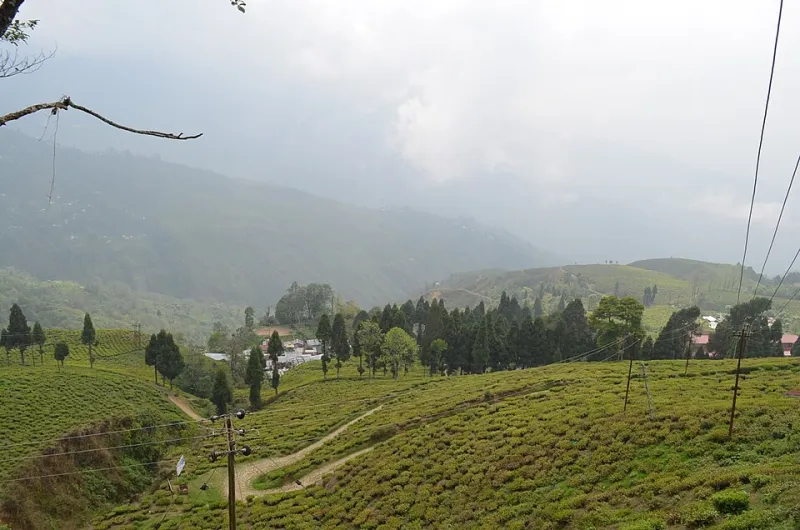
Photo: Ngostary2k, CC BY-SA 4.0, via Wikimedia Commons
Open any standard economic analysis of Darjeeling and you will find data on tea export volumes, tourism revenue, and formal employment figures. What you will not find—because no standard metric captures it—is any accounting of the vast ecosystem of labor that actually holds Darjeeling's communities together. The women who coordinate informal childcare networks across three villages. The elders who spend their afternoons transmitting botanical knowledge to apprentices who will never receive a credential for learning it. The young men who walk the ridge trails each season monitoring stream flow and reporting changes to community water councils.
This work is real. It is skilled. It is consequential. And by every conventional measure of economic productivity, it does not exist.
Across the United States, a growing community of economists, human resources professionals, and policy researchers is beginning to argue that Darjeeling's relationship with unmeasured labor—how the community recognizes, sustains, and reciprocates it—offers a genuinely instructive model for addressing some of America's most stubborn economic pathologies. The argument is not sentimental. It is structural.
The Architecture of the Invisible
Darjeeling's informal economy of care and community maintenance is not accidental. It is the product of deliberate cultural investment across generations. In many villages throughout the Darjeeling hills, community life is organized around what might be described as nested reciprocity networks—webs of mutual obligation that distribute the costs of collective care across households, age cohorts, and seasonal cycles.
Childcare, for instance, is rarely a purely private arrangement. Informal networks of grandmothers, aunts, and trusted neighbors absorb substantial caregiving labor that allows working-age adults—particularly women—to participate in both formal and informal economic activity. These networks are not charity. They operate on an understood logic of reciprocal contribution: today's caregiver expects to be cared for, in turn, by the community she has served.
Similarly, the transmission of ecological knowledge—which plants signal soil degradation, which bird behaviors predict monsoon timing, which watershed conditions indicate aquifer stress—occurs through mentoring relationships that are woven into the fabric of daily community life. An elder accompanying younger community members on a forest walk is not, by any formal accounting, working. By any honest accounting, she is performing some of the most economically significant labor in the region: preserving knowledge systems that no university has fully documented and that underpin the community's capacity to manage its natural resources across generations.
What American Economists Are Beginning to Recognize
The invisibility of care work is not a problem unique to Darjeeling, of course. American feminist economists have spent decades documenting the extent to which unpaid domestic and care labor—disproportionately performed by women—is systematically excluded from GDP calculations and, consequently, from policy consideration. The Bureau of Labor Statistics has produced satellite accounts estimating the value of household production, but these remain peripheral to mainstream economic analysis and entirely disconnected from policy levers.
What Darjeeling's model adds to this conversation is not a new argument for counting what has been uncounted. It is something more operationally specific: a set of community practices that actively sustain unmeasured labor by embedding it in systems of social recognition and reciprocal support. The distinction matters enormously. Measuring care work without supporting the conditions that make it possible—and the people who perform it—produces better statistics without producing better outcomes.
Several American researchers affiliated with labor economics institutes have begun studying Darjeeling's informal support systems as potential templates for community-level policy design. One area of particular interest is the relationship between informal caregiving networks and formal labor market participation. In communities where robust informal childcare networks exist, women's participation in both formal employment and community governance tends to be substantially higher. The informal infrastructure, in other words, enables formal economic activity—a relationship that conventional economic models are structurally unable to see.
The Gig Economy's Blind Spot
The stakes of this analytical failure have grown considerably more acute in the era of platform-mediated gig work. The American gig economy—Uber drivers, TaskRabbit contractors, freelance designers, delivery workers—has effectively formalized the logic of unmeasured labor: workers bear the full cost of their own training, health maintenance, equipment, and downtime, while platforms capture the economic value of their availability. The costs that platforms externalize onto workers are, in the language of community economics, the invisible labor of self-maintenance—and they are enormous.
Darjeeling's community structures suggest a different possibility. In settings where the costs of individual maintenance are distributed across community networks—where a sick worker is not solely responsible for her own recovery, where a parent is not solely responsible for arranging childcare, where an elder's knowledge is not allowed to die with him—the individual burden of economic participation is substantially reduced. Workers are, in a meaningful sense, less precarious because the community has assumed some of the risk that market systems leave entirely to individuals.
HR professionals at several US companies have begun exploring how workplace design might incorporate analogous principles. Peer mentoring programs, caregiver support networks, and structured knowledge-transfer initiatives—when treated not as perks but as core labor infrastructure—reduce the hidden costs that workers currently absorb invisibly. The business case, proponents argue, is straightforward: organizations that reduce the invisible burden on their workforce retain talent longer, reduce burnout, and build institutional knowledge more effectively.
Recognition as Policy
Perhaps the most provocative implication of Darjeeling's model is what it suggests about the relationship between recognition and sustainability. In communities where informal labor is socially acknowledged—where the woman who coordinates the childcare network is publicly honored, where the elder who teaches watershed monitoring is consulted in community decisions—that labor tends to be sustained across generations. Where it is invisible, it tends to erode.
American communities and organizations grappling with caregiver shortages, knowledge loss, and volunteer burnout might find this observation directly applicable. The question is not only how to compensate unmeasured labor—though compensation matters—but how to build the cultural infrastructure of recognition that makes people willing to perform it at all. Darjeeling's communities have not solved this problem perfectly. But they have sustained practices of recognition that most American institutions have not yet developed the vocabulary to describe.
Toward an Expanded Accounting
At APS Darjeeling, our work is grounded in the conviction that community development requires an honest accounting of what communities actually do—not merely what formal economies record. Darjeeling's invisible labor is not a curiosity or an artifact of a pre-modern economy. It is a sophisticated, adaptive system for sustaining collective life under conditions of resource constraint and environmental uncertainty.
As American institutions confront the compounding pressures of demographic change, climate disruption, and economic precarity, the question of what counts as work—and who bears the cost of work that doesn't count—is becoming impossible to defer. Darjeeling's communities have been answering that question, imperfectly but persistently, for generations. The answers they have developed deserve a serious hearing in the policy conversations now underway across the United States.