Planting for Grandchildren: How Darjeeling's Generational Mindset Is Challenging America's Quarterly Obsession
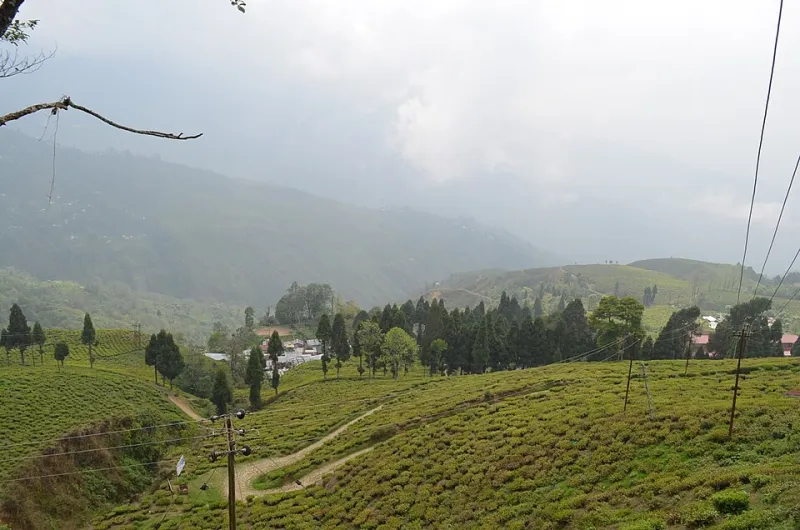
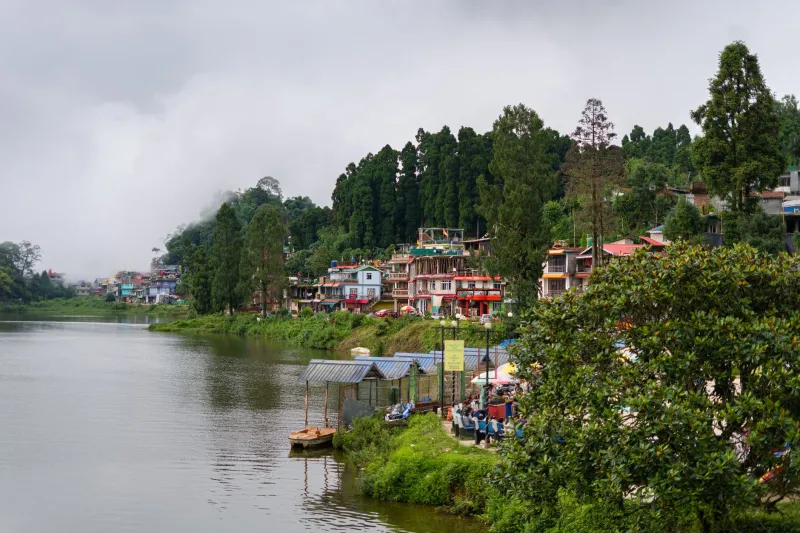
Photo: Matt Stabile, CC BY 2.0, via Wikimedia Commons
In the mist-draped highlands above Darjeeling, a tea estate manager once explained to a visiting American consultant that the bush she was admiring had been planted by his grandfather. It would, he added matter-of-factly, be tended by his grandchildren. The consultant later said that single observation changed how she thought about strategy more than any MBA course she had taken.
That encounter is not unusual. Across Darjeeling's agricultural estates, forest cooperatives, and village councils, a fundamentally different relationship with time governs decision-making. Where American corporations are structurally compelled to demonstrate value every ninety days, Darjeeling's communities have long operated on a horizon measured in decades—sometimes centuries. The consequences of that difference, it turns out, are far more than philosophical.
The Tea Cycle as Strategic Framework
Darjeeling's signature first-flush teas—among the most prized in the world—cannot be rushed. A Camellia sinensis bush requires years of careful cultivation before it produces leaves of genuine complexity. The finest estates maintain bushes that are fifty, sixty, even one hundred years old, understanding that age and continuity of care are themselves ingredients in quality.
This reality has shaped an entire management culture. Estate managers do not optimize for this season's yield at the expense of next decade's soil health. Pruning schedules, shade-tree planting, and composting protocols are all evaluated against a multi-generational timeline. Workers are trained not merely to execute tasks but to understand why certain practices protect the land's productive capacity across lifetimes.
The contrast with conventional American agribusiness—where soil depletion, monoculture, and short-rotation cropping are endemic—is stark. But the contrast with American corporate governance more broadly is equally instructive. When Darjeeling estate cooperatives began partnering with US specialty food importers in the early 2010s, those importers encountered something genuinely foreign: suppliers who would decline practices that boosted short-term output if those practices compromised long-term soil integrity. Initially, American buyers found this frustrating. Over time, many found it transformative.
What American Partners Are Learning
Consider the experience of a Vermont-based specialty tea retailer that formalized a direct sourcing partnership with a Darjeeling worker cooperative nearly a decade ago. In its early years, the company pressured its Darjeeling partners to expand production during peak demand seasons. The cooperative's leadership declined, citing soil recovery cycles and the welfare of seasonal workers who could not sustainably absorb the additional labor burden.
Rather than walking away, the Vermont company's leadership chose to study the cooperative's planning model. They discovered that the cooperative maintained what it called a "three-generation ledger"—an informal but disciplined practice of evaluating every major decision against its likely impact on the community thirty to sixty years into the future. Investments in worker housing, reforestation, and apprenticeship training were all justified not by immediate returns but by their projected contribution to community stability across time.
The Vermont retailer adapted this framework internally. It began conducting what its CEO described as "decade reviews"—structured assessments of how current decisions around sourcing, employee development, and environmental practice would compound over ten-year intervals. Within five years, employee retention had improved significantly, supplier relationships had deepened, and the company's environmental audit scores had risen substantially. None of these outcomes appeared on a quarterly earnings report. All of them, leadership argued, were the reason the company remained viable.
Forest Stewardship and the Long Ledger
Beyond the tea gardens, Darjeeling's community forest management groups offer another dimension of this long-horizon thinking. Under India's Joint Forest Management framework, local communities in the Darjeeling hills have assumed stewardship responsibilities over significant tracts of forest land. These groups make planting, harvesting, and conservation decisions through consensus processes that explicitly account for the needs of future residents.
American conservation organizations working alongside these groups have noted something striking: the absence of what one Oregon-based ecologist called "the tragedy of the now"—the tendency of institutions under short-term pressure to extract present value at the expense of future capacity. Darjeeling's forest councils, she observed, treat restraint not as sacrifice but as the foundational act of responsible governance.
Several US municipalities grappling with urban forestry and watershed management have begun consulting with Darjeeling-affiliated organizations to understand how community stewardship models can be adapted to American contexts. The interest reflects a growing recognition that technical expertise alone does not produce long-term environmental outcomes—cultural frameworks that normalize delayed gratification are equally essential.
Rethinking the Metrics of Success
Perhaps the deepest challenge Darjeeling's model poses to American organizational life is methodological. Quarterly earnings reports, key performance indicators, and annual performance reviews are all instruments calibrated to short cycles. They are extraordinarily good at measuring what happened recently. They are poorly designed to capture whether an organization is building the kind of durable capacity—in its workforce, its supplier relationships, its environmental footprint—that will determine its relevance in twenty years.
Some American management theorists have begun arguing for what they call "patient capital" metrics: measures that track employee tenure and development trajectories, supplier relationship depth, community trust indicators, and ecological restoration progress over multi-year baselines. Darjeeling's cooperative and estate management practices offer empirical grounding for these arguments. They demonstrate, in real operational contexts, that organizations governed by long-term orientation can produce superior outcomes across precisely the dimensions that short-term metrics tend to ignore.
The lesson is not that quarterly accountability is worthless. It is that quarterly accountability, untempered by generational thinking, tends to cannibalize the very assets it claims to protect.
A Different Kind of Competitive Advantage
In Darjeeling, the eldest tea bushes are not merely productive assets. They are institutional memory made botanical—living evidence that someone, generations ago, made choices oriented toward a future they would never personally inhabit. That orientation is, in its way, the most radical competitive strategy imaginable in an era defined by disruption and impermanence.
American organizations willing to study it carefully may find that the most durable advantage available to them is not a faster algorithm or a more aggressive acquisition strategy. It is the discipline to plant for grandchildren they will never meet—and to build the organizational culture capable of honoring that commitment across the inevitable turbulence of decades.
At APS Darjeeling, we believe that connecting communities across geography means more than exchanging goods and services. It means exchanging the frameworks through which communities understand time, responsibility, and flourishing. Darjeeling's generational mindset is not a relic of an earlier era. It is a living practice—and one that American organizations are only beginning to take seriously.