The Nearest Doctor Is a Neighbor: What Darjeeling's Frontline Health Workers Offer America's Widening Rural Care Gap
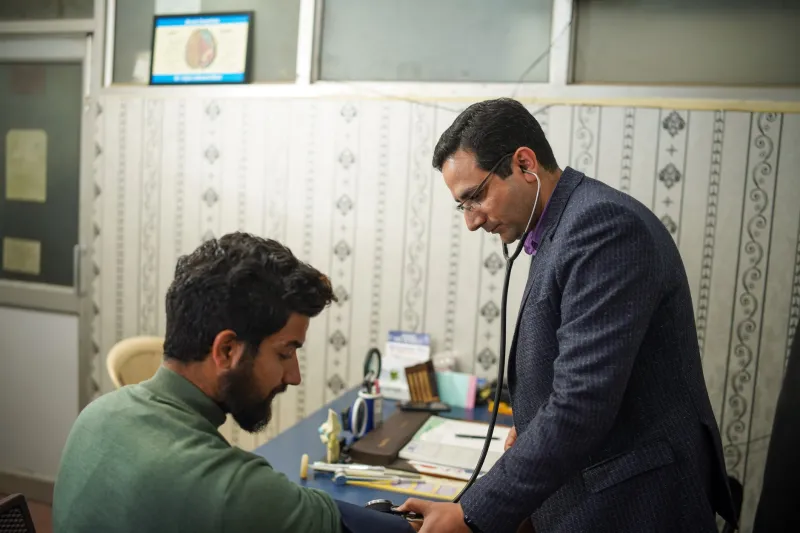
It is just past seven on a Tuesday morning, and Sarita Pradhan is already on her second doorstep. She carries a canvas satchel, a blood-pressure cuff, a ledger covering ninety-one households, and a phone with a cracked corner that holds the numbers of two physicians, a pharmacist, and an ambulance driver she has met only once.
Ms. Pradhan is not a doctor. She has never claimed to be. She is a community health worker, one of several hundred women and men who quietly form the connective tissue of primary care across the Darjeeling hills. She is the first knock on the door, the first reading of the year, the person who notices that a pregnant woman's ankles are swelling more than they did last week.
The Gap the Road Doesn't Close
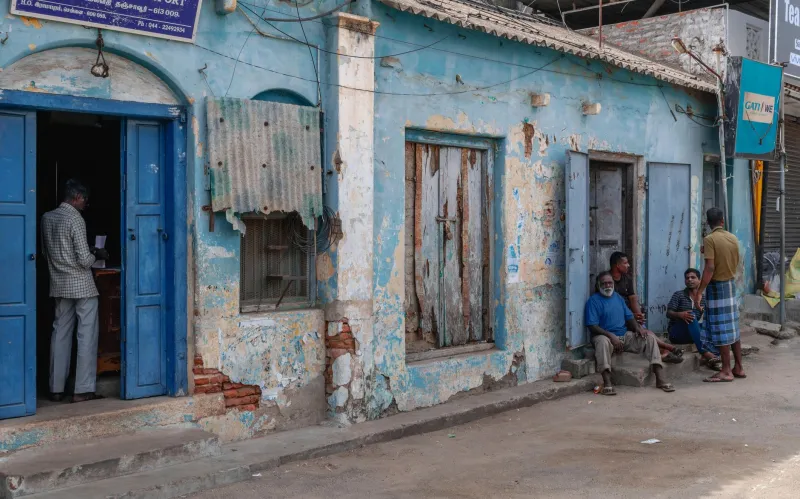
Geography here is unforgiving. Many settlements sit an hour or more of steep walking above the nearest road head, and the road head is itself a long drive from a hospital. When the monsoon takes out a link road — which it does, reliably, most years — a village that was already distant becomes an island.
The hills did not solve this problem by building more hospitals. That arithmetic never worked. Instead, the region distributed a narrower, sharper kind of skill: it trained residents to recognize danger early, act within a defined scope, and hand off quickly. The result is not a substitute for medicine. It is a delivery system for medicine that would otherwise arrive too late.
What a Trained Neighbor Actually Does
A working day for Ms. Pradhan looks nothing like a clinic shift. On a single round she may:
- Check blood pressure and medication adherence for two elderly patients with hypertension, recording both in her ledger and in a phone-based register.
- Weigh a three-month-old, compare the figure with last month's, and flag a slow curve to the block-level nurse.
- Sit with a young mother for twenty minutes on breastfeeding and hand-washing, answering questions the mother did not want to ask a stranger in a crowded waiting room.
- Follow up on a tuberculosis patient's treatment schedule, counting pills and noting side effects.
- Wrap a sprained ankle, clean a minor wound, and explain — firmly — why a suspected fracture needs the hospital in Kurseong and not a homemade splint.
"People will tell me things they will not tell a doctor they meet once," Ms. Pradhan says. "They tell me because I was at their daughter's wedding. They tell me because I will still be here next month."
That last sentence is the whole model in miniature.
Trust Is the Delivery Mechanism
Every health system relies on someone closing the distance between advice and behavior. In dense cities, that distance is short: a pharmacy on every corner, a clinic within twenty minutes. In the hills, it is measured in hours, and hours are where chronic conditions become emergencies.
Community health workers compress that distance by carrying two things the formal system cannot easily transport: familiarity and routine. Familiarity gets the door opened. Routine gets the follow-up completed. A nurse practitioner in an American county can prescribe perfectly and still lose a patient to the gap between the prescription and the pharmacy forty minutes away.
The American Arithmetic
None of this is exotic to the United States. Community health workers already exist in American counties, and several states reimburse for their services through Medicaid. What is different, and worth studying, is the placement.
Too often in the U.S., the community health worker is designed as a bridge to the clinic — a temporary escort to a system that remains the destination. In Darjeeling, the worker is a standing layer of the system itself, with a defined scope, a supervisor, a referral route, and a caseload small enough to be known.
The American need is real. Well over a hundred rural hospitals have closed or shed inpatient services since 2010. Large swaths of the country are classified as primary-care shortage areas, and hundreds of counties have no obstetric care at all. Telemedicine is part of the answer, but a video call still requires connectivity, privacy, and someone at the other end capable of taking a blood pressure correctly. That someone is exactly the role in question.
A Practical Checklist for American Communities
For county health departments, rural clinics, and town officials considering a similar layer, the following sequence has proven more durable than a grant-funded pilot.
- Start with a roster, not a program. Identify the neighborhoods with the longest time-to-care and the highest share of elderly and isolated residents. Recruit from within those streets, not from a job board in the county seat.
- Pay people, even modestly. Volunteer goodwill is real and it evaporates. A stipend, mileage, and a phone allowance are the difference between a role and a hobby.
- Define the handoff precisely. Write down what the worker does, what triggers a call to a clinician, and who answers that call at 9 p.m. Ambiguity here is where these programs fail.
- Train to a narrow scope and re-certify annually. Blood pressure technique, maternal warning signs, medication reminders, and triage thresholds — taught to a standard, tested, refreshed.
- Build in supervision and a peer group. A worker alone with a caseload and no one to call becomes either reckless or paralyzed. Monthly case review with a nurse or physician assistant is not overhead; it is the safety system.
- Measure the right things. Time from symptom to first contact. Emergency department visits among enrolled households. Missed referrals. Immunization and prenatal check completion. Not the number of home visits.
- Fund the boring middle. The failure mode in American pilot programs is a three-year grant followed by a cliff. Multi-year, blended funding — county budget, Medicaid, hospital community-benefit dollars — is what makes the roster survive staff turnover.
The Lesson Beneath the Model
The Darjeeling approach is not an argument for doing without doctors. It is an argument about where capability ought to sit. A health system that requires a physician for every act of care is a system that will always be short of physicians. A health system that trains and trusts its own residents to do a defined, supervised, well-bounded portion of the work gets more care out of the same number of doctors.
For American towns watching their nearest maternity ward close and their clinic recruit a physician for the third year running, that is not a sentimental story about mountain villages. It is a staffing strategy.